Drone Laws and Registration Explained: What You Need Before You Fly (US, UK, EU)
Drone rules differ by country, they change, and getting them wrong can mean fines — treat this as a starting point and verify against the official regulator…
Drone rules differ by country, they change, and getting them wrong can mean fines — treat this as a starting point and verify against the official regulator before you fly.
United States (FAA)
Any drone weighing 0.55 lb (250 g) or more at takeoff — including battery, propellers, and anything attached — must be registered with the FAA before its first flight, recreational or commercial. Registration is via FAA DroneZone and costs $5. For recreational flyers, one registration covers your entire fleet for three years; commercial Part 107 pilots register each aircraft individually. Drones under 250 g are exempt for **recreational use only** — that exemption disappears the moment you fly commercially. Remote ID, which broadcasts your drone's location, has been required since 2023 for any drone that needs registration.
United Kingdom (CAA)
The UK splits this into two IDs. A **Flyer ID** is free, obtained by passing a short online theory test, and is required for anyone flying. An **Operator ID** costs £12.34/year and is required for anyone who owns a drone — critically, this applies if the drone has a camera **or** weighs over 250 g, so a sub-250 g drone with a camera still needs one. Applicants must be 18+.
European Union (EASA)
The EU's "Open category" splits into A1 (over people, not crowds), A2 (closer to people, extra exam), and A3 (remote areas, 150 m from people). New drones carry a C0-C4 class mark tied to weight, determining which subcategory applies. Operator registration is required EU-wide for any drone with a camera or over 250 g. Important nuance: many drones sold before class-marking was fully in force don't carry an official class mark and fly under legacy transitional rules — restricted to A3, meaning 150 m from uninvolved people regardless of actual weight.
What this means for a Mini 4 Pro vs Air 3S buyer
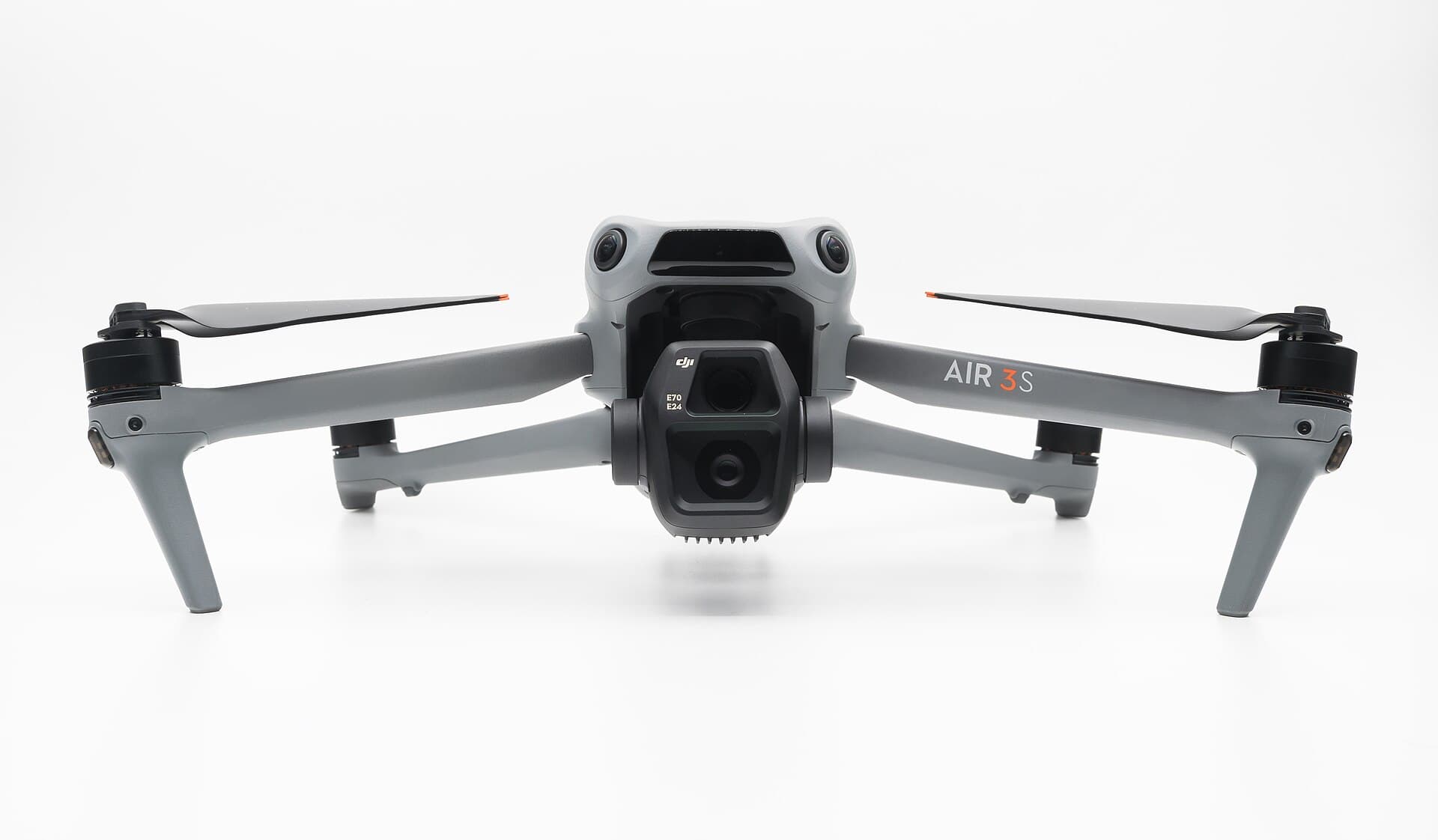
DJI lists the Mini 4 Pro at under 249 g — deliberately under the line — while the Air 3S is 724 g. In the US, a recreational Mini 4 Pro flyer can skip FAA registration; an Air 3S owner cannot. In the UK and EU, the weight distinction barely affects registration (both have cameras, so both need an Operator ID) but matters a great deal for which subcategory and distance rules apply.
**Verify with your national aviation authority before flying — these rules change.**
Products covered
| Specification | DJI Mini 4 Pro | DJI Air 3S |
|---|---|---|
| Weight | <249g (standard battery) | 724g |
| Camera sensor | 1/1.3" CMOS, 48MP, f/1.7 | 1" 50MP wide + 1/1.3" 48MP tele |
| Max flight time | 34 min (45 min with Battery Plus) | 45 min (best-case) |
| Launch price (USD) | 759 USD | 1099 USD |
| Transmission range | 20km (FCC, ideal conditions) | 20km (FCC, ideal conditions) |
Sources
Tech Carvalho does not publish hands-on test results. This piece is written from the sources above and from public documentation. See our editorial policy.