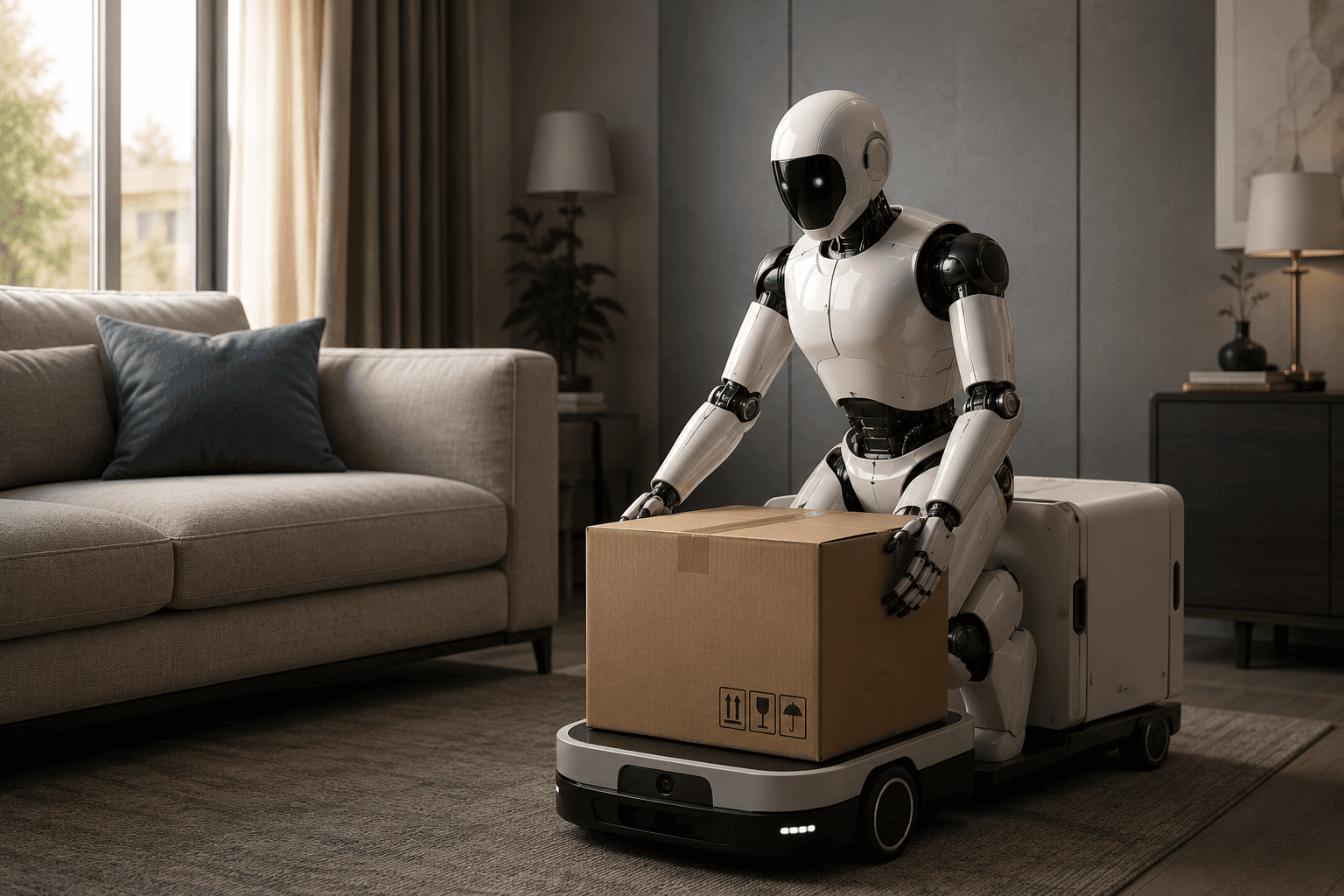
Humanoid Home Robots Are Shipping in 2026 — Here's What They Actually Do
What 1X's NEO, Tesla's Optimus, and other home robots actually do in 2026, and how their real, supervised task range compares to the marketing.
2026 is being described in industry coverage as the first year walking, human-shaped robots are actually shipping to ordinary homes rather than existing purely as research demos or pilot programs. That's a genuinely new milestone — but the gap between "shipping" and "does everything a robot in a demo video appears to do" is worth being explicit about.
Official/confirmed: products exist and are shipping
1X Technologies' NEO robot began deliveries in 2026, offered at $20,000 outright or a $499/month subscription, targeting household tasks including cleaning, laundry, and basic meal preparation. Reporting also describes the NEO Gamma variant, at roughly 5'6" tall, with early adopters already ordering for delivery later in 2026. Separately, Neura Robotics' 4NE-1 Mini is reported to ship from April 2026 at a price around €19,999, and Tesla's Optimus is reported to be targeting limited consumer availability from Summer 2026 — figures come from company statements and reporting current as of this piece; treat exact ship dates as subject to the kind of slippage common across the robotics and hardware industry generally.
Reputable report: real capability is narrower than "humanoid robot" suggests
Coverage describing current-generation capability is consistent on one point: meal preparation, where offered, is currently limited to simple tasks like microwaving and pouring rather than actual cooking, and household tasks as a category reportedly account for only around a quarter of these robots' current real-world deployments — meaning a meaningful share of what these companies are actually shipping units for is not home chores at all. Multiple sources also describe first-generation home units as relying on remote human supervision and constrained, scheduled task menus rather than full autonomy.
Speculation/informed projection: the "useful for most households" timeline is further out
Industry coverage explicitly frames 2026 as the arrival of home robots specifically, while describing genuinely useful autonomous humanoid robots for most households as more plausibly a 2030s development — a forward-looking industry expectation, not a confirmed date, and one that should be read as one analyst/publication perspective rather than an industry consensus.
What this actually means if you're considering one
At current prices (roughly $20,000 outright, or several hundred dollars monthly), and with capability limited to specific, constrained tasks under active supervision, 2026's humanoid home robots are early-adopter hardware in a genuine sense — not yet a mainstream home-automation purchase in the way a robot vacuum or smart speaker is. That's not a criticism of the technology; it's an accurate description of where a genuinely new product category actually stands in its first shipping year, as opposed to how it's sometimes described in marketing and speculative coverage.
The bottom line
Real products, at real (high) prices, are genuinely shipping to consumer homes in 2026 for the first time — that part is confirmed. Their actual task range is narrower and more supervised than "humanoid robot" implies to most people, and broader, more autonomous capability is a reported industry expectation for years still to come, not something already delivered.

Sources
- 1X Technologiesprimary source
- KraneShares
- AOL
Tech Carvalho does not publish hands-on test results. This piece is written from the sources above and from public documentation. See our editorial policy.