Ryzen 7 9800X3D vs Ryzen 9 9950X: Gaming Chip or Workstation Chip?
These two chips get cross-shopped constantly. On paper the 9950X looks "better" — twice the cores of the 9800X3D (16 vs. 8) and a higher list price ($649 vs…
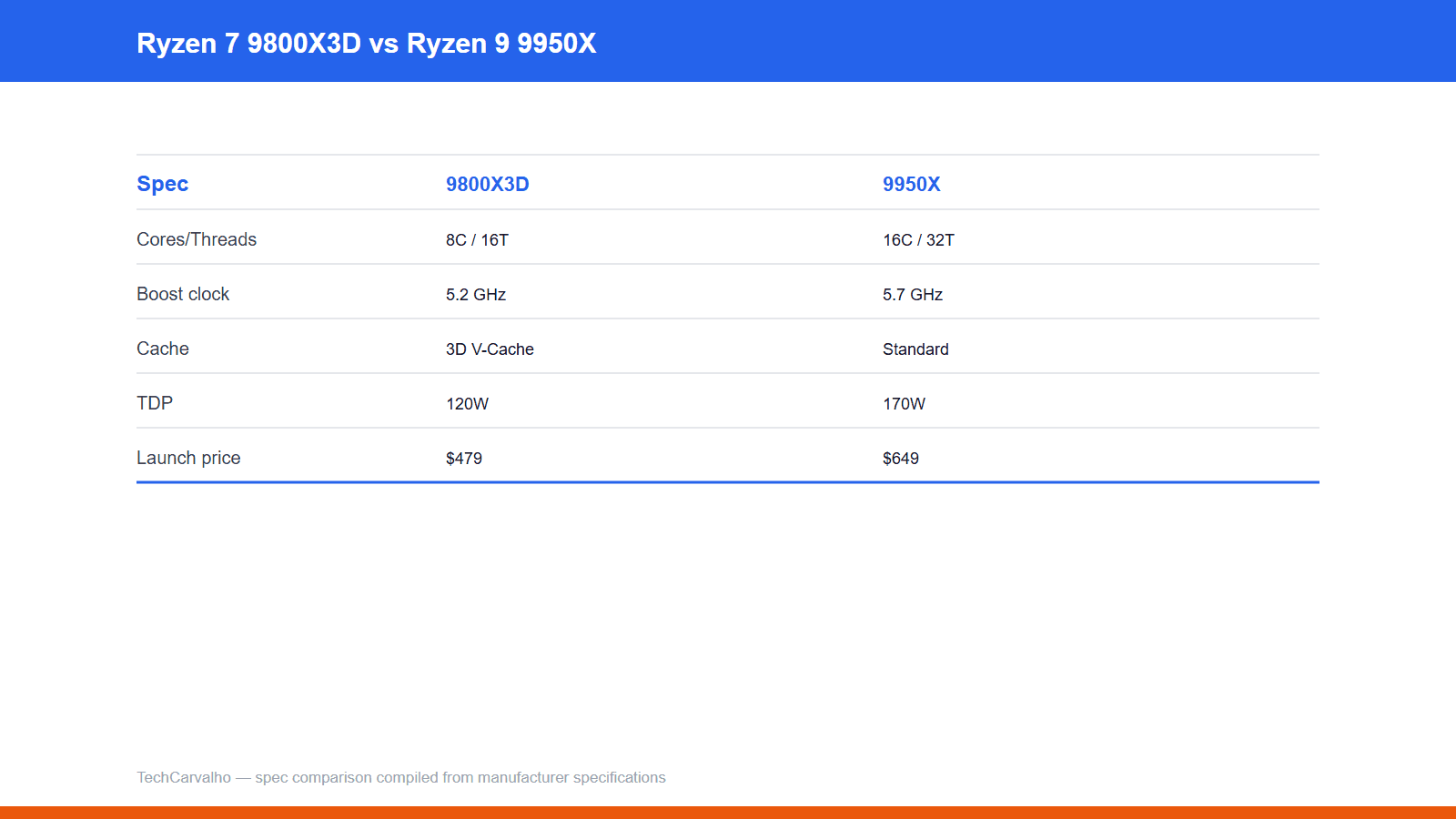
These two chips get cross-shopped constantly. On paper the 9950X looks "better" — twice the cores of the 9800X3D (16 vs. 8) and a higher list price ($649 vs. $479). But for gaming specifically, more cores loses.
The chips
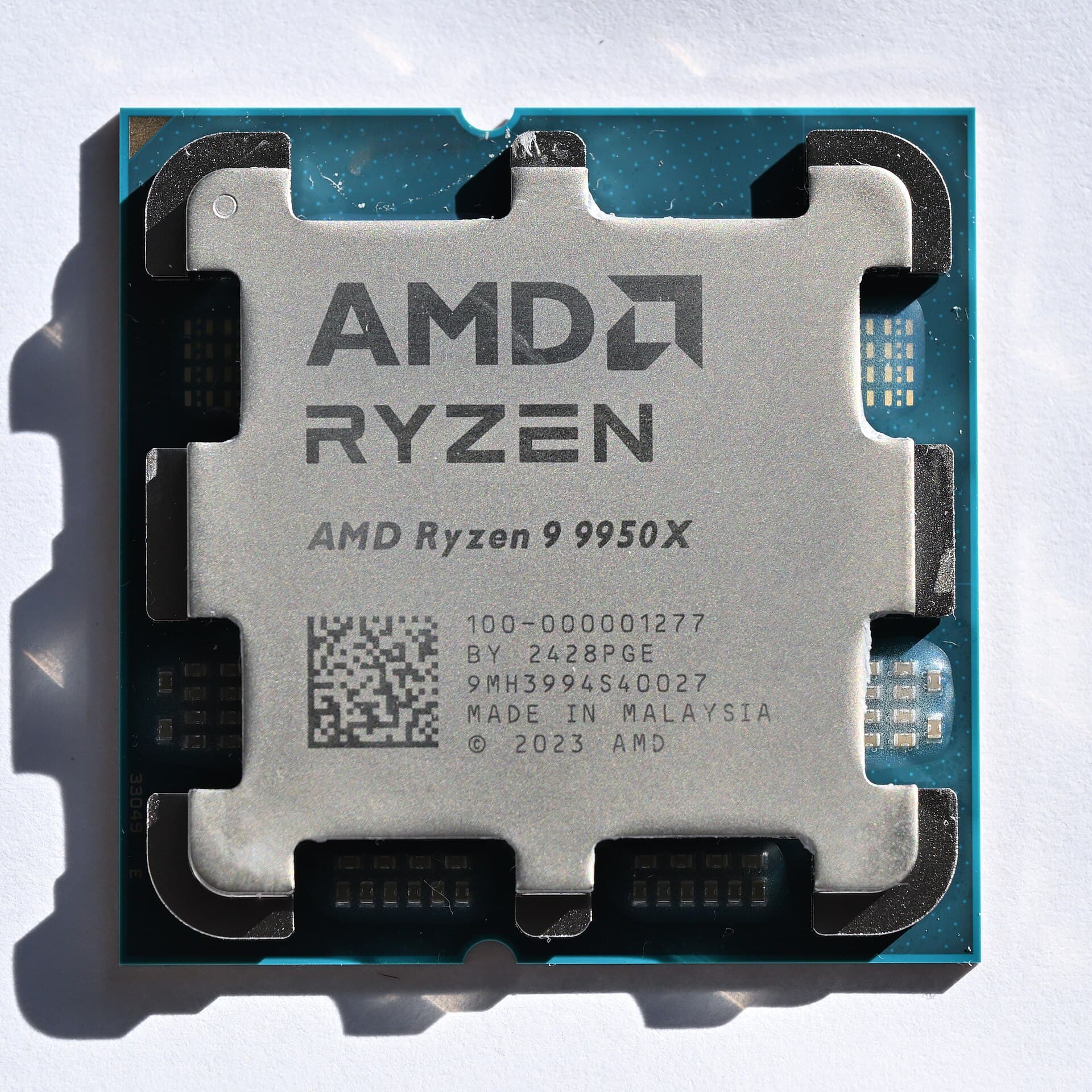
The 9800X3D is an 8-core, 16-thread Zen 5 chip running 4.7 GHz base up to 5.2 GHz boost, with AMD's 2nd-generation 3D V-Cache stacked underneath the compute die, at a 120W TDP. The 9950X is a 16-core, 32-thread chip with no 3D V-Cache, running 4.3 GHz base up to 5.7 GHz boost, at a 170W default TDP.
Why cache beats cores for gaming
Most game engines are far more sensitive to cache hit rate and memory latency than to raw core count — a game rarely saturates more than 6-8 cores meaningfully, but constantly benefits from data staying close to the CPU. AMD's 3D V-Cache is built exactly to reduce those cache misses.
Where the 9950X wins
Anything that actually uses 16 cores and 32 threads: video encoding, 3D rendering, large compile jobs, virtualization. If your workload is genuinely multi-threaded and not games, the 9950X's core count is real, usable performance the 9800X3D cannot match.
The buying rule
If gaming is your primary use, buy the 9800X3D — it's cheaper, runs cooler (120W vs. 170W), and matches or beats the 9950X in nearly every game. Don't buy the 9950X for gaming expecting the extra cores to help; they largely won't. If you do serious multi-threaded productivity work and only sometimes game, the 9950X is the better all-rounder.
Products covered
Sources
Tech Carvalho does not publish hands-on test results. This piece is written from the sources above and from public documentation. See our editorial policy.
Related comparisons
Other comparisons in Computing.