Canon R10 vs R7: Canon's APS-C Mirrorless Lineup Explained
Why the R10 and R7 aren't a generational succession, and the one spec — in-body stabilization — that matters more than everything else on this comparison.
Canon announced the R10 and R7 on the same day — 24 May 2022 — as two tiers of one APS-C mirrorless generation, not a succession from one to the other. The R7 launched at $1,499, the R10 at $979.99. Treating this as "which is the better camera" misses the point; Canon built these to serve different buyers simultaneously, and the spec gaps reflect that.
In-body stabilization: the single biggest functional gap on this list
The R7 has 5-axis in-body stabilization rated to 7 stops. The R10 has none — lens-based stabilization only. Of everything compared below, this is arguably the most consequential difference for handheld shooting in low light or with lenses that don't have their own stabilization.
Resolution and burst rate
The R7's 32.5MP sensor sits well above the R10's 24.2MP. Mechanical burst rate is actually identical at 15fps for both; the real gap is on the electronic shutter, where the R7 reaches 30fps against the R10's 23fps.
Autofocus tracking detail
The R7's confirmed specs explicitly document human/animal/vehicle subject tracking across 651 automatic zones and 5,915 total AF points. The R10's confirmed specs list the same core Dual Pixel CMOS AF II system across 651 focus zones, without the same explicit tracking-mode detail recorded for that product. Both bodies run the same underlying AF generation — the difference here is what's confirmed in each product's own spec data, not necessarily a difference in the underlying feature set.
Build: viewfinder, screen, weather sealing, storage
The R7's EVF sits at 1.15x magnification against the R10's 0.95x — a noticeably larger apparent image. The R7's rear screen resolution is documented at 1.62 million dots; the R10's confirmed specs list a fully articulating touchscreen without a stated dot count. The R7 has dual SDXC UHS-II card slots and confirmed weather sealing; the R10 has a single SDXC UHS-II slot, with no weather sealing listed in its confirmed specs.
Weight and price
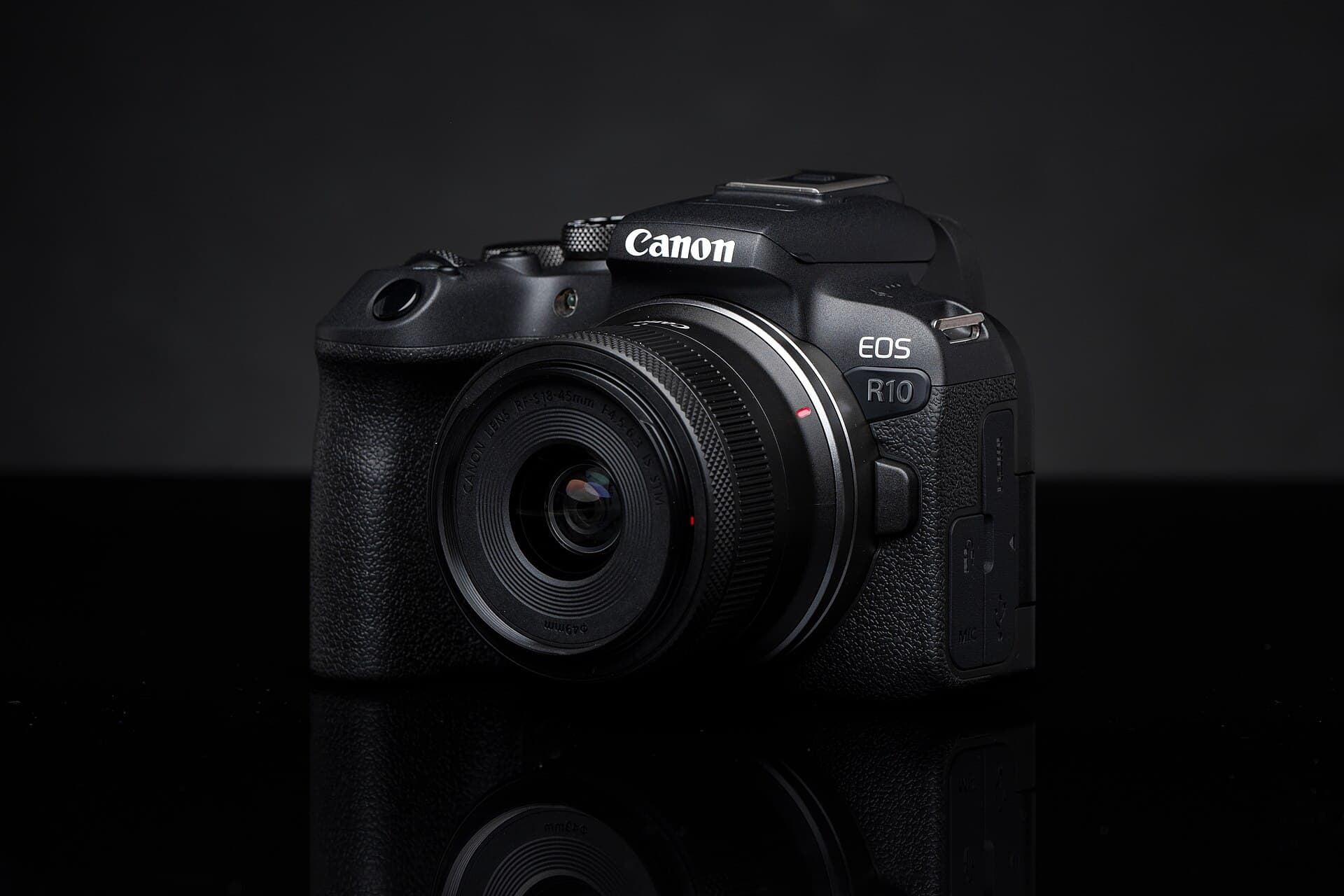
The R7 weighs 530g at $1,499. The R10 weighs 426g at $979.99 — over $500 cheaper and noticeably lighter, a real factor for travel or all-day carry.
Who should pick which
The R7: wildlife, action, and sports shooters who'll benefit from in-body stabilization paired with unstabilized telephoto lenses, and anyone who wants confirmed weather sealing and dual card slots for reliability. The R10: buyers starting out on a tighter budget, and general, travel, or family photography where in-body stabilization matters less because you're not routinely shooting handheld in low light with long lenses.
The honest bottom line
This isn't old-vs-new — it's two genuinely different tools from the same generation. The R7 is built for anyone whose subject or lens choice makes stabilization and tracking detail worth the extra cost and weight; the R10 is built for everyone else.
Products covered
| Specification | Canon EOS R7 | Canon EOS R10 |
|---|---|---|
| Sensor type | CMOS sensor, approx. 22.3 x 14.8 mm (APS-C) | CMOS sensor, approx. 22.3 x 14.9 mm (APS-C) |
| Effective megapixels | 32.5 MP | 24.2 MP |
| Burst rate (electronic shutter) | 30 fps | 23 fps |
| Shutter speed range | 30 s - 1/8000 s (mechanical); 1/16000 s (electronic) | 30s to 1/4000s (mechanical); 30s to 1/16000s (electronic) |
| Video resolutions/frame rates | 4K up to 59.94fps; 1080p up to 119.9fps | 4K UHD up to 29.97fps (59.94fps with crop); 1080p up to 119.88fps |
| Image stabilisation | 5-axis in-body, up to 7 stops | None (lens-based IS only) |
| Electronic viewfinder | 2.36m-dot OLED EVF, 1.15x magnification | 2.36m-dot OLED EVF, 0.95x magnification |
| Rear display | 3.2in fully articulating, 1.62m dots | 3.0in fully articulating touchscreen |
| Storage/card slots | 2x SDXC (UHS-II) | 1x SDXC (UHS-II) |
| Battery model | LP-E6NH | LP-E17 |
| Dimensions (W×H×D) | 132 x 90 x 92 mm | 122.5 x 87.8 x 83.4 mm |
| Weight (body only) | 530 g | 426 g |
| Connectivity | USB-C (10Gbps), Wi-Fi 4, Bluetooth 4.2 | USB-C (USB 2.0), Wi-Fi 4, Bluetooth 4.2 |
| Launch MSRP (USD, body only) | $1,499 (body only) | $979.99 (body only) |
| Card slots | 2 | 1 |
| Weight | 612 g | 429 g |
| Width | 132 mm | 122.5 mm |
| Height | 90.4 mm | 87.8 mm |
| Depth | 91.7 mm | 83.4 mm |
| Sensor format | aps-c | aps-c |
| Processor | DIGIC X | DIGIC X |
| Lens mount | RF | RF |
| Autofocus system | Dual Pixel CMOS AF (Canon states "Dual Pixel CMOS AF: Supported") | Dual Pixel CMOS AF (Canon states "Dual Pixel CMOS AF: Supported") |
| ISO range (native) | 100-32000 | 100-32000 |
Related comparisons
Other head-to-heads covering the same subject.
 Comparison
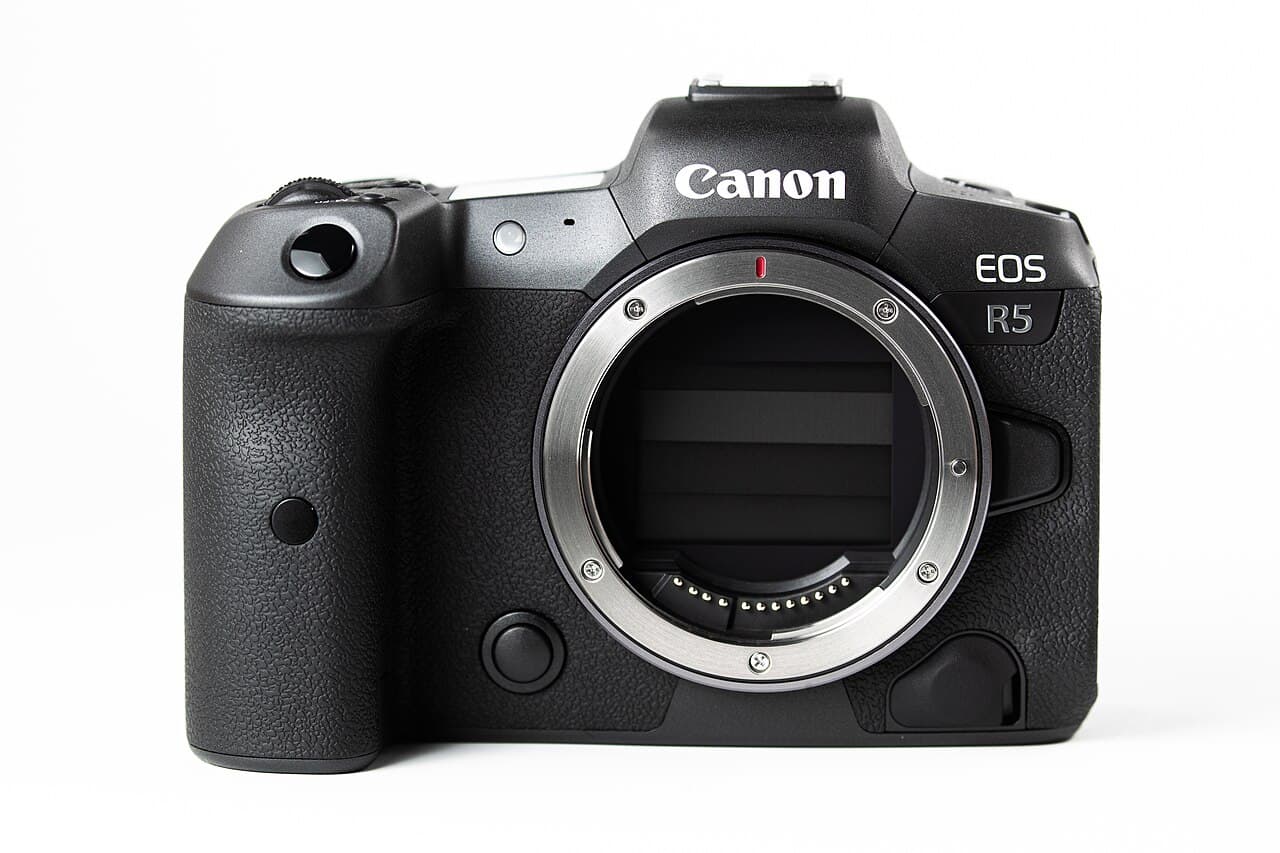
Canon EOS R5 vs R6: Which Full-Frame R Body Do You Need
Resolution, video ceiling, and the ISO advantage that actually favors the cheaper R6 — a spec-by-spec look at Canon's two July 2020 full-frame flagships.
 Comparison
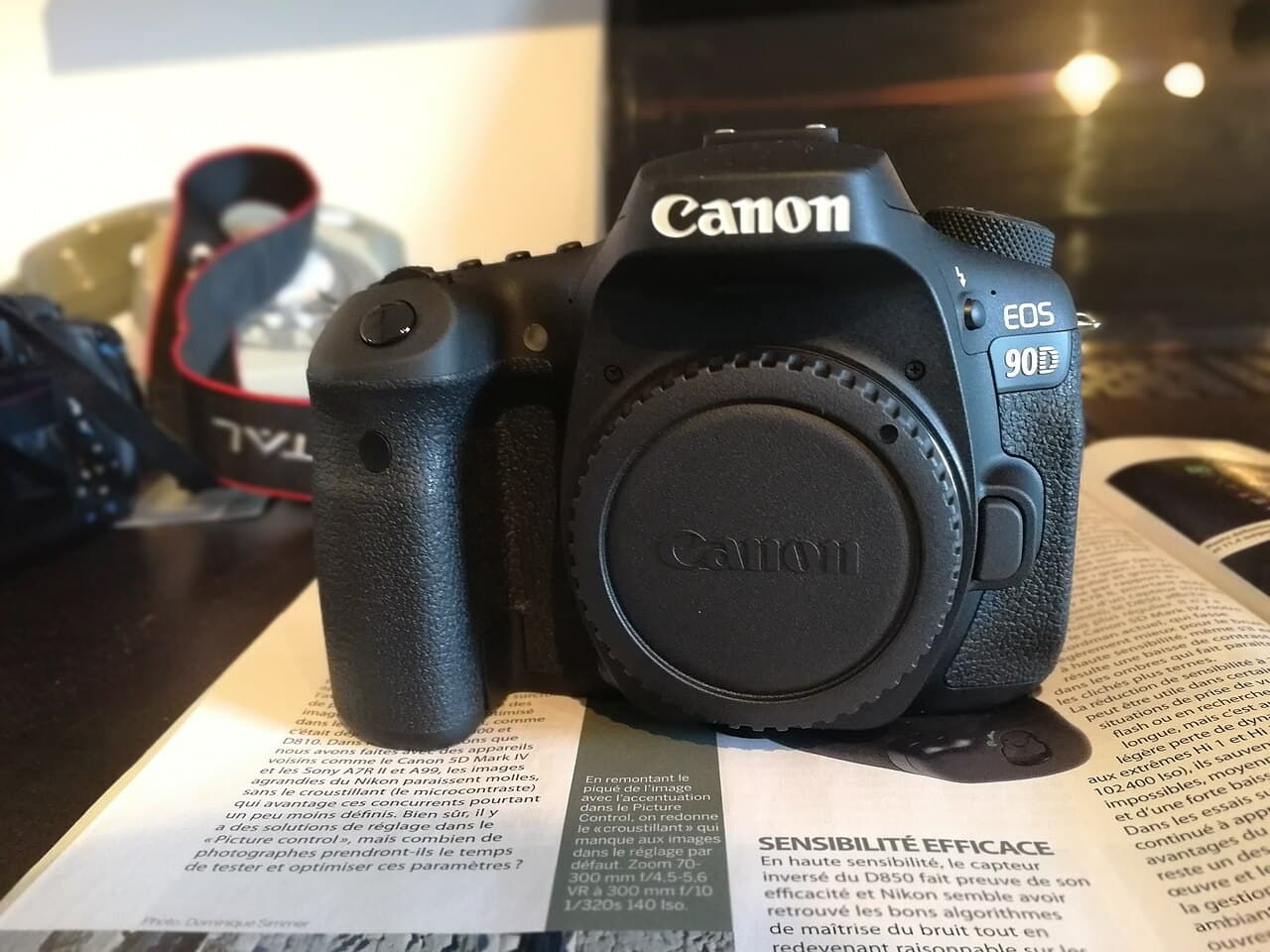
Canon 90D vs Entry Mirrorless: Which Should You Actually Buy
Canon's last major APS-C DSLR against a current entry-level APS-C mirrorless body — autofocus generation, battery life, weather sealing, and lens ecosystem compared.
 Comparison
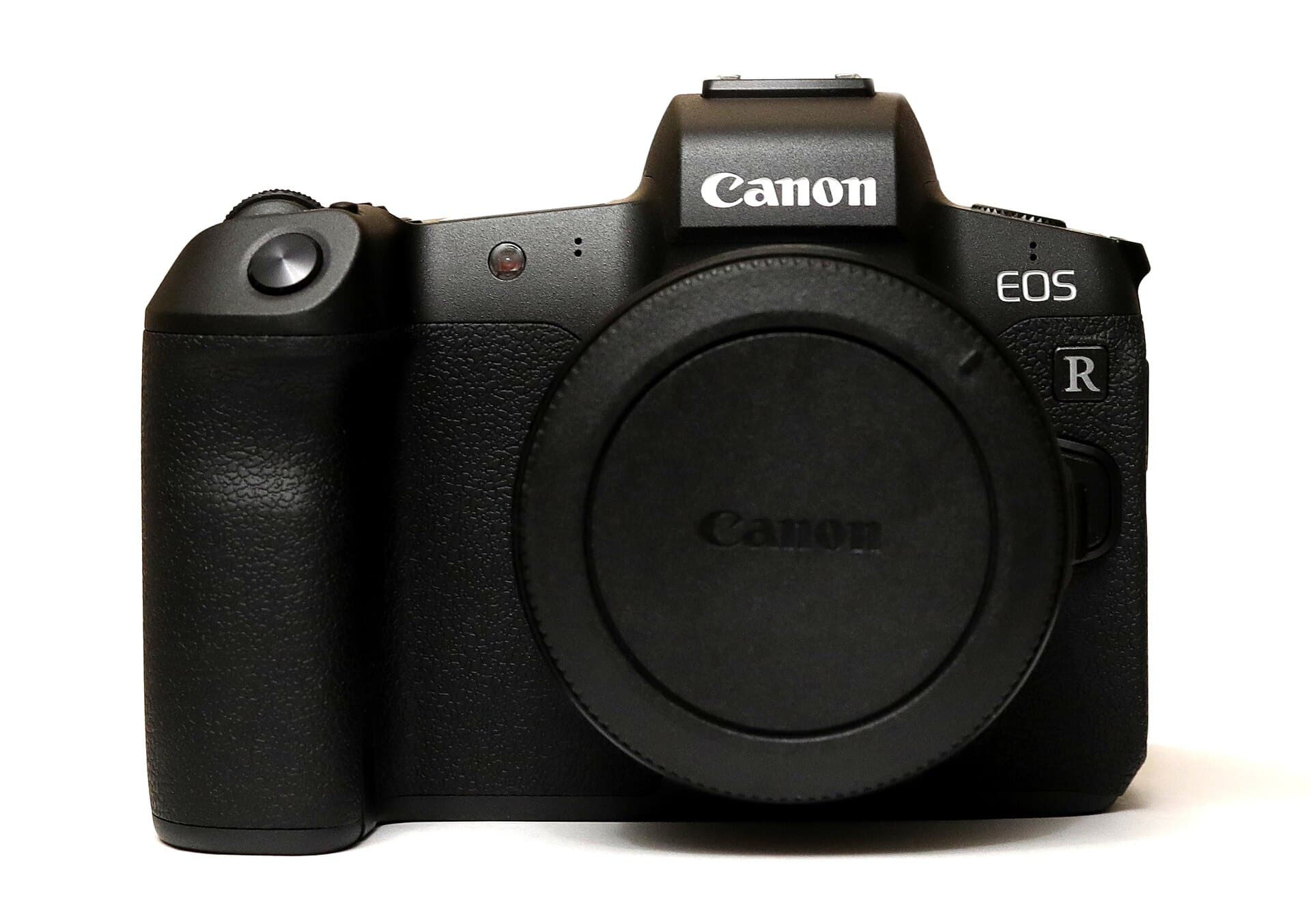
Canon EOS R vs RP: Canon's First Full-Frame Mirrorless Bodies Compared
Canon's original full-frame RF mirrorless body against the smaller, cheaper RP that followed five months later — viewfinder, burst rate, battery, and video crop compared.
 Comparison
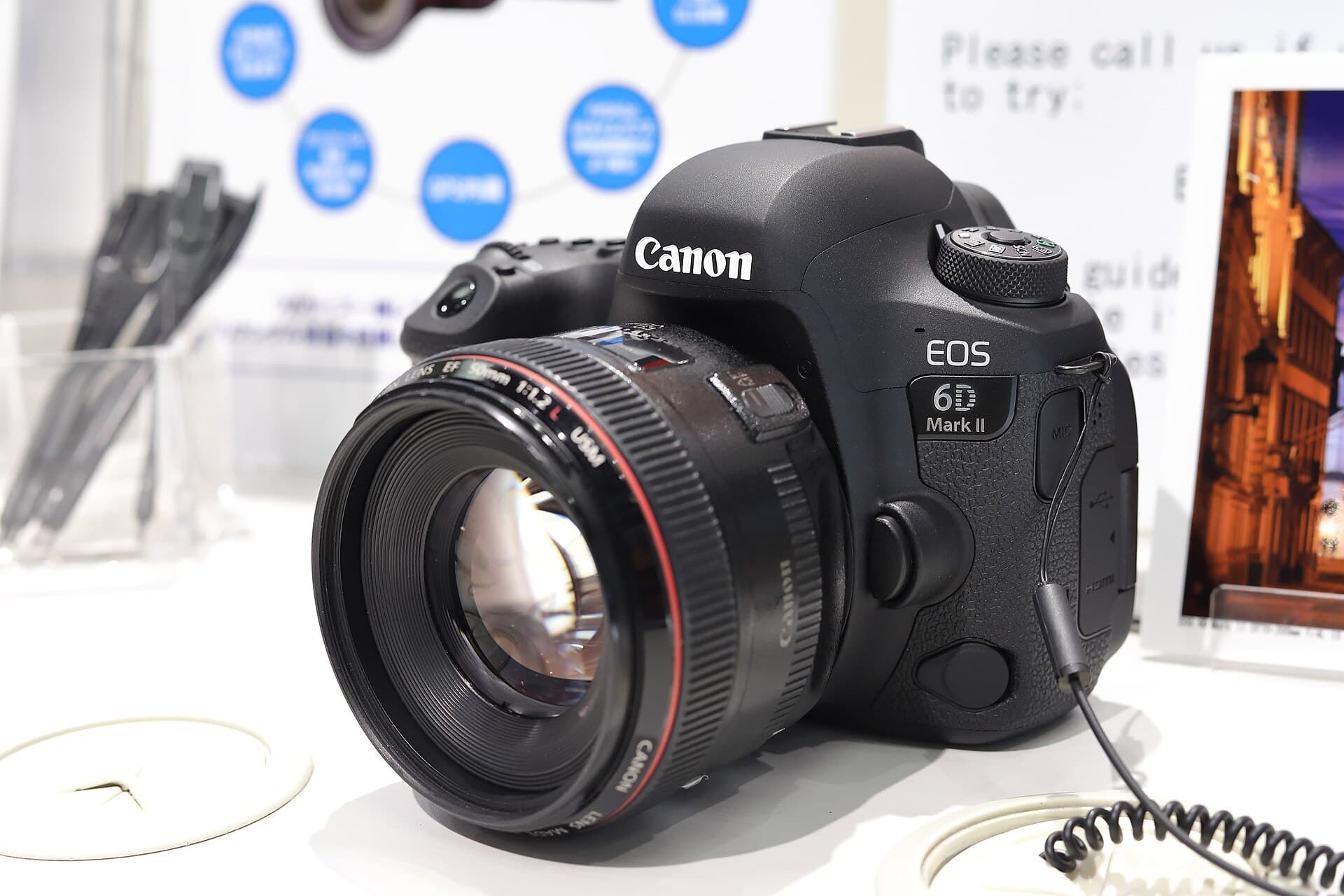
Canon 6D vs 6D Mark II: Is the Upgrade Actually Worth It
What actually changed between Canon's original entry-level full-frame DSLR and its 2017 successor — autofocus, screen, ISO — and the video limit that didn't move.