Best Used Canon DSLRs for Beginners
Why a used Canon DSLR is still a smart first camera, what actually matters for learning photography, and how to buy used gear safely.
A beginner doesn't need the newest camera. A beginner needs a camera that won't get in the way of learning exposure, composition, and how a lens actually behaves — and a used Canon DSLR, bought carefully, does that for a fraction of the price of anything current.
What actually matters for a first camera
Manual controls you can reach without digging through menus — a real mode dial, ideally a rear control wheel. A viewfinder you're comfortable composing through, since DSLRs are built around that experience. Compatibility with widely available, inexpensive lenses, so you can actually afford to try a 50mm prime or a longer zoom once you outgrow the kit lens. None of this requires a recent camera.
What matters less than it seems
Megapixel count, past a fairly low threshold, has almost no bearing on whether beginner photos look good — composition, light, and exposure decide that. The newest autofocus system matters far more for action photography than for a beginner learning fundamentals on mostly static subjects. 4K video is irrelevant if you're learning stills.
Where to actually look
Canon's enthusiast APS-C line (the 60D through 90D covered elsewhere in this guide) and the entry-level Rebel/xxxD line are both reasonable starting points; the enthusiast line generally has better build and more external controls, at a higher used price, while the Rebel line is smaller, lighter, and cheaper. Either is a legitimate way to start — the enthusiast line rewards you as you grow into manual control, but a Rebel-series body with a decent kit lens is a completely capable way to learn.
Buying used, practically
Check shutter count if the seller can provide it (a rough guide: DSLR shutters are typically rated for well into six figures of actuations, so a used body with a modest shutter count has plenty of life left). Test autofocus on a real subject before buying, not just that the camera powers on. Prioritize a clean sensor and no fungus/haze on any included lens over cosmetic body wear, which rarely affects performance. Buy the body and a single versatile lens rather than a bundle of lenses you won't use yet — you'll learn faster with one lens you know well than three you don't.
The actual first purchase
Body, one lens you'll actually use regularly, and nothing else. A beginner kit padded with accessories is money that would be better spent later, once you know what you're missing rather than guessing at it in advance.
Products covered
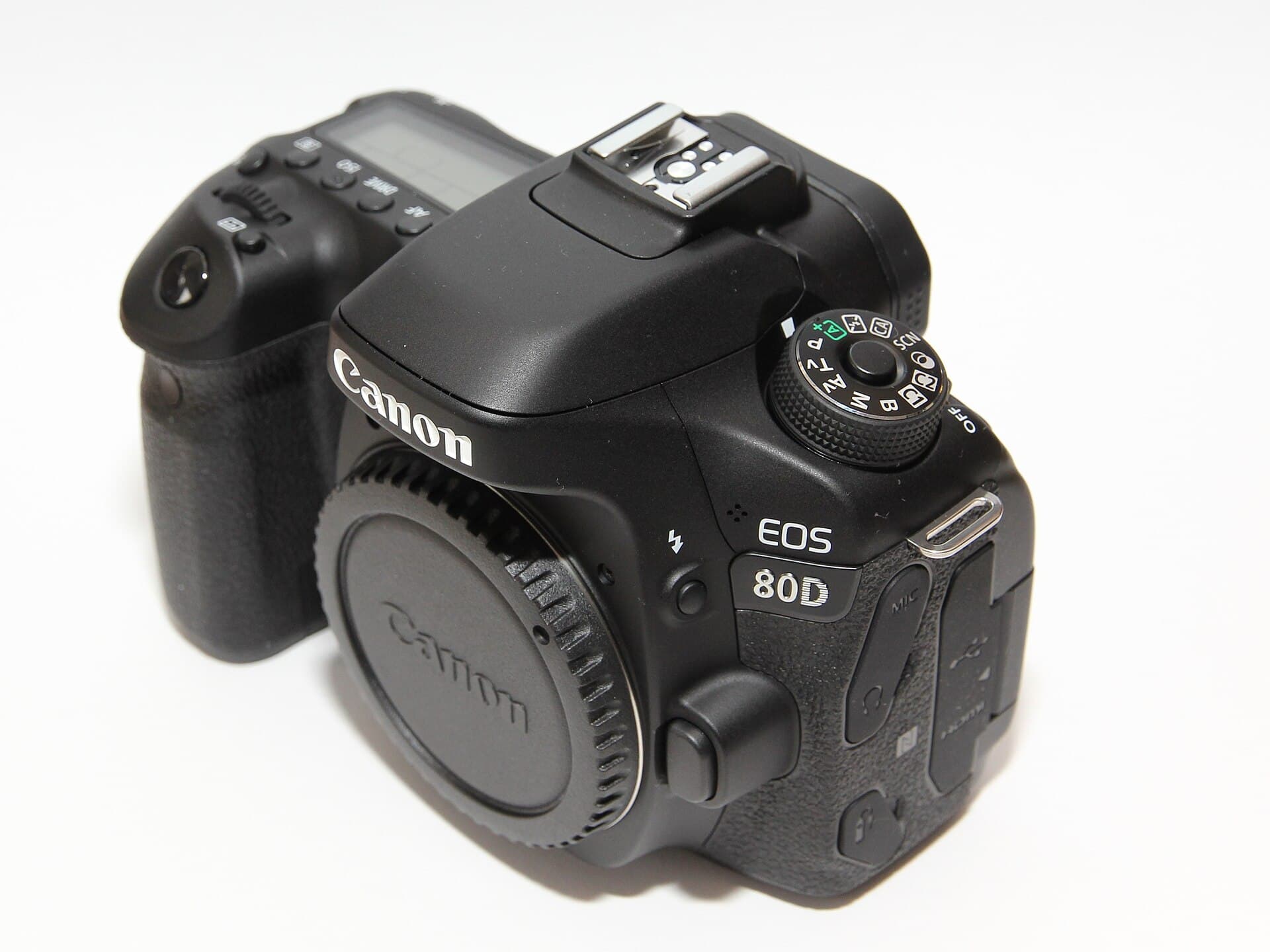
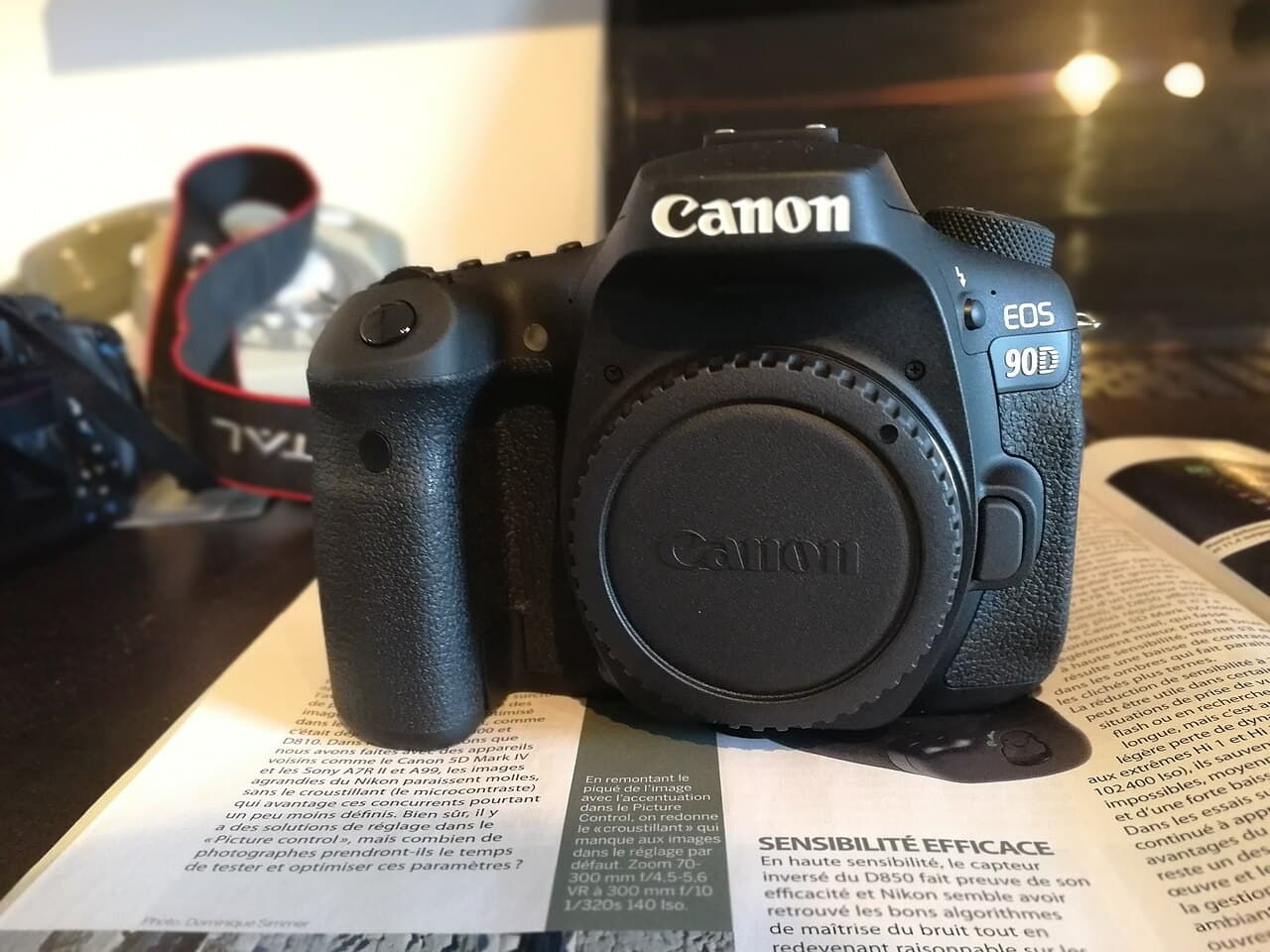
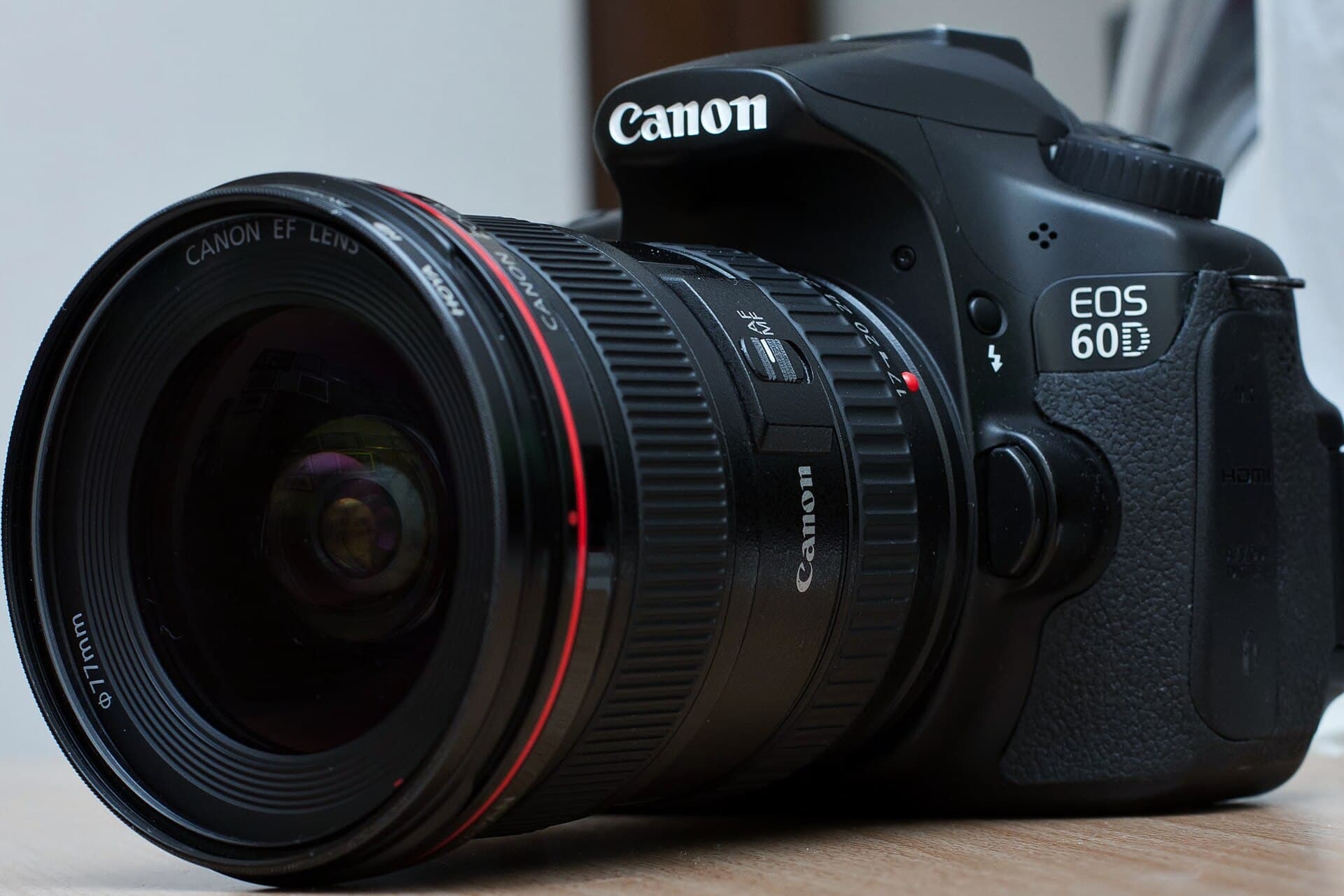
| Specification | Canon EOS 60D | Canon EOS 70D | Canon EOS 90D | Canon EOS 80D |
|---|---|---|---|---|
| Sensor format | APS-C (22.3 x 14.9 mm) | APS-C (22.5 x 15.0 mm) | aps-c | APS-C (22.3 x 14.9 mm) |
| Sensor type | CMOS | CMOS | CMOS sensor (supports Dual Pixel CMOS AF), approx. 22.3 x 14.8 mm | CMOS |
| Effective megapixels | 18.1 MP | 20.2 MP | 32.5 MP | 24.2 MP |
| Processor | DIGIC 4 | DIGIC 5+ | DIGIC 8 | DIGIC 6 |
| Lens mount | Canon EF-S | Canon EF-S | EF-S | Canon EF-S |
| Autofocus system | 9 cross-type AF points | 19 cross-type AF points, Dual Pixel CMOS AF | 45-point all cross-type phase-detection AF with dedicated AF sensor (viewfinder); Dual Pixel CMOS AF in live view | 45 cross-type AF points |
| ISO range (native) | 100-6400 | 100-12800 | 100-25600 | 100-16000 |
| ISO range (expanded) | H: 12800 | 25600 | H: 51200 | H: 25600 |
| Burst rate (mechanical shutter) | 5.3 fps | 7 fps | 10 fps | 7 fps |
| Shutter speed range | 1/8000 sec. - 30 sec. and Bulb; X-sync at 1/250 sec. | 1/8000 sec. to 30 sec.; X-sync at 1/250 sec. | 30 sec. - 1/8000 sec. (mechanical); 1/16000 sec. (electronic) | 1/8000 sec. - 30 sec., Bulb; X-sync at 1/250 sec. |
| Video resolutions/frame rates | 1080p at 24/25/30p; 720p at 50/60p; 480p at 50/60p | Full HD (1080p) | 4K UHD 30p and 1080p FHD up to 120p, no crop | 1080p at 60/50 fps |
| Electronic viewfinder | Eye-level pentaprism, 96% coverage, 0.95x magnification | Eye-level pentaprism, 98% coverage, 0.95x magnification | Optical pentaprism, 100% coverage, 0.95x magnification | Optical pentaprism, 100% coverage, 0.95x magnification |
| Rear display | Fully articulating 3.0in Clear View II colour LCD, 1,040,000 dots | 3.0in Clear View II colour TFT vari-angle touchscreen, 1,040,000 dots | 3.0in Clear View II colour TFT vari-angle touchscreen | 3.0in Clear View II colour TFT vari-angle touchscreen |
| Storage/card slots | SD/SDHC/SDXC | SD/SDHC/SDXC (UHS-I) | SD/SDHC/SDXC (UHS-II) | SD/SDHC/SDXC (UHS-I) |
| Battery model | LP-E6 (1800 mAh) | LP-E6 (1800 mAh) | LP-E6N (1800 mAh) | LP-E6N |
| Battery life (CIPA shots) | Not recorded | Not recorded | 1300 shots | 960 shots |
| Dimensions (W×H×D) | 144.5 x 105.8 x 78.6 mm | 139.0 x 104.3 x 78.5 mm | 140.8 x 104.8 x 76.8 mm | 139 x 105.2 x 78.5 mm |
| Weight (body only) | 755 g | 755 g | 701 g | 650 g |
| Connectivity | 3.5mm stereo mic jack; external shutter release port | Built-in Wi-Fi; 3.5mm stereo microphone jack | Bluetooth, Wi-Fi | Built-in NFC, Wi-Fi |
| Announcement date | 26 August 2010 | 2 July 2013 | 28 August 2019 | 18 February 2016 |
| Launch MSRP (USD, body only) | $1,099 (body only) | $1,199 (body only) | $1,199 (body only) | Not recorded |