Canon DSLR Buying Guide: Which EOS Body Actually Makes Sense Now
A practical breakdown of when a Canon DSLR still makes sense in 2026, and how to choose between the xxD, 6D, and 5D lines based on what you actually shoot.
Canon stopped treating the DSLR as its flagship line years ago — the EOS R mirrorless system gets the new sensors, the new autofocus systems, and the new lens designs. That doesn't mean the DSLR lineup stopped being useful. It means buying one today is a different decision than it was a decade ago, and it's worth being explicit about what that decision actually involves.
Why anyone would still buy a DSLR
Three practical reasons keep coming up. First, price: a used DSLR body, especially an APS-C enthusiast model, is often dramatically cheaper than an equivalent mirrorless body with a comparable feature set, because the used market is flooded with them. Second, lens availability: Canon's EF mount has two decades of lenses behind it, many of them excellent and now inexpensive secondhand, and EF lenses adapt cleanly onto EOS R bodies if you do eventually move to mirrorless. Third, battery life and handling: DSLRs generally run longer on a charge than mirrorless bodies of the same era, because an optical viewfinder doesn't draw power the way an electronic one does, and many photographers simply prefer the grip and control layout Canon refined over multiple DSLR generations.
Why you might not
An optical viewfinder shows you the scene, not the exposure — you don't get a live preview of how a shot will actually look until you take it, which mirrorless corrects for. Autofocus in live view (as opposed to through the viewfinder) tends to be slower and less confident on DSLRs than on any modern mirrorless body, which matters a lot if you shoot video or rely on the rear screen. And because Canon's own development attention has moved on, you're buying into a system that will not get new bodies, only a shrinking pool of used and remaining new stock.
How to actually choose
Start from what you photograph, not from a model number. If you shoot mostly static subjects — landscapes, architecture, product work, posed portraits — the live-view autofocus gap matters much less, and a DSLR's viewfinder and battery advantages are a real, ongoing benefit. If you shoot moving subjects, sports, wildlife, kids, events, autofocus performance matters more than almost anything else in the camera, and this is the area where the mirrorless generation genuinely moved ahead.
Within Canon's APS-C DSLR line, the xxD series (60D, 70D, 80D, 90D and their predecessors) represents the enthusiast tier — physically larger bodies, more direct external controls, generally better build than the entry-level Rebel/xxxD line, and each generation added incremental autofocus, video, and connectivity improvements over the last. See the individual model guides linked below for what specifically changed between them. Full-frame DSLRs (the 6D and 5D lines) trade some of that for a bigger sensor and correspondingly better low-light and depth-of-field control, at a real cost premium even used.
The honest bottom line
A DSLR is not "obsolete" in the sense of being unable to take good photos — sensor and image quality on a 2016-era enthusiast DSLR is still genuinely good. It's a trade-off: you're accepting a slower, more dated autofocus and live-view experience in exchange for a lower price, a mature lens ecosystem, and often better handling and battery life. Whether that trade is worth it depends entirely on what you shoot, not on chasing whatever is newest.
Products covered
| Specification | Canon EOS 5D Mark IV | Canon EOS 5D Mark III | Canon EOS 60D | Canon EOS 6D | Canon EOS 70D | Canon EOS 6D Mark II | Canon EOS 90D | Canon EOS 80D |
|---|---|---|---|---|---|---|---|---|
| Sensor format | Full-frame (36 x 24 mm) | Full-frame (36 x 24 mm) | APS-C (22.3 x 14.9 mm) | Full-frame (35.8 x 23.9 mm) | APS-C (22.5 x 15.0 mm) | full-frame | aps-c | APS-C (22.3 x 14.9 mm) |
| Sensor type | CMOS | CMOS | CMOS | CMOS | CMOS | CMOS sensor, approx. 35.9 x 24.0 mm | CMOS sensor (supports Dual Pixel CMOS AF), approx. 22.3 x 14.8 mm | CMOS |
| Effective megapixels | 30.4 MP | 22.3 MP | 18.1 MP | 20.2 MP | 20.2 MP | 26.2 MP | 32.5 MP | 24.2 MP |
| Processor | DIGIC 6+ (imaging); DIGIC 6 (metering/tracking) | DIGIC 5+ | DIGIC 4 | DIGIC 5+ | DIGIC 5+ | DIGIC 7 | DIGIC 8 | DIGIC 6 |
| Lens mount | Canon EF | Canon EF | Canon EF-S | Canon EF | Canon EF-S | EF | EF-S | Canon EF-S |
| Autofocus system | 61-point AF (41 cross-type at f/4, 21 cross-type at f/8), High-density Reticular AF II | 61-point AF, 41 cross-type (High-density Reticular AF) | 9 cross-type AF points | 11-point AF, 1 cross-type centre point (sensitive to -3 EV) | 19 cross-type AF points, Dual Pixel CMOS AF | 45-point all cross-type phase-detection AF (viewfinder); Dual Pixel CMOS AF in live view | 45-point all cross-type phase-detection AF with dedicated AF sensor (viewfinder); Dual Pixel CMOS AF in live view | 45 cross-type AF points |
| ISO range (native) | 100-32000 | 100-25600 | 100-6400 | 100-25600 | 100-12800 | 100-40000 | 100-25600 | 100-16000 |
| ISO range (expanded) | 50-102400 | L: 50, H2: 102400 | H: 12800 | L: 50, H1: 51200, H2: 102400 | 25600 | L: 50, H2: 102400 | H: 51200 | H: 25600 |
| Burst rate (mechanical shutter) | 7 fps | 6 fps | 5.3 fps | 4.5 fps | 7 fps | 6.5 fps | 10 fps | 7 fps |
| Shutter speed range | 30-1/8000 s plus Bulb; X-sync at 1/200 s | 30 sec. - 1/8000 sec. and Bulb; X-sync at 1/200 sec. | 1/8000 sec. - 30 sec. and Bulb; X-sync at 1/250 sec. | 30 s to 1/4000 s, Bulb; X-sync at 1/180 s | 1/8000 sec. to 30 sec.; X-sync at 1/250 sec. | 1/4000 s - 30 s, Bulb; X-sync at 1/180 s | 30 sec. - 1/8000 sec. (mechanical); 1/16000 sec. (electronic) | 1/8000 sec. - 30 sec., Bulb; X-sync at 1/250 sec. |
| Video resolutions/frame rates | DCI 4K (4096x2160) at 30fps with 1.64x crop; 1080p to 60fps; 720p to 120fps | Not recorded | 1080p at 24/25/30p; 720p at 50/60p; 480p at 50/60p | 1920x1080 at 24/25/30p; 1280x720 at 50/60p; 640x480 at 50/60p | Full HD (1080p) | 1080p at 60/50 fps; 4K time-lapse only (no 4K video recording) | 4K UHD 30p and 1080p FHD up to 120p, no crop | 1080p at 60/50 fps |
| Electronic viewfinder | Eye-level pentaprism, 100% coverage, 0.71x magnification | Eye-level pentaprism, 100% coverage, 0.71x magnification | Eye-level pentaprism, 96% coverage, 0.95x magnification | Optical pentaprism, 97% coverage, 0.71x magnification | Eye-level pentaprism, 98% coverage, 0.95x magnification | Optical pentaprism, 98% coverage, 0.71x magnification | Optical pentaprism, 100% coverage, 0.95x magnification | Optical pentaprism, 100% coverage, 0.95x magnification |
| Rear display | 3.2in touchscreen, 1,620,000 dots | 3.2in, 1,040,000 dots | Fully articulating 3.0in Clear View II colour LCD, 1,040,000 dots | 3.0in, approx. 1,040,000 dots | 3.0in Clear View II colour TFT vari-angle touchscreen, 1,040,000 dots | 3.0in vari-angle touchscreen, 1,040,000 dots | 3.0in Clear View II colour TFT vari-angle touchscreen | 3.0in Clear View II colour TFT vari-angle touchscreen |
| Storage/card slots | CompactFlash Type I + SD/SDHC/SDXC | CompactFlash Type I (UDMA-7) + SD/SDHC/SDXC | SD/SDHC/SDXC | SD/SDHC/SDXC (UHS-I) | SD/SDHC/SDXC (UHS-I) | SD/SDHC/SDXC (UHS-I) | SD/SDHC/SDXC (UHS-II) | SD/SDHC/SDXC (UHS-I) |
| Battery model | LP-E6N | LP-E6 (1800 mAh); also compatible with LP-E6NH | LP-E6 (1800 mAh) | LP-E6 (1800 mAh) | LP-E6 (1800 mAh) | LP-E6N | LP-E6N (1800 mAh) | LP-E6N |
| Battery life (CIPA shots) | 900 shots | Not recorded | Not recorded | Not recorded | Not recorded | 1200 shots | 1300 shots | 960 shots |
| Dimensions (W×H×D) | 150.7 x 116.4 x 75.9 mm | 152 x 116.4 x 76.4 mm | 144.5 x 105.8 x 78.6 mm | 144.5 x 110.5 x 71.2 mm | 139.0 x 104.3 x 78.5 mm | 144.0 x 110.5 x 74.8 mm | 140.8 x 104.8 x 76.8 mm | 139 x 105.2 x 78.5 mm |
| Weight (body only) | 800 g | 860 g | 755 g | 680 g | 755 g | 685 g | 701 g | 650 g |
| Connectivity | Built-in Wi-Fi, NFC | Not recorded | 3.5mm stereo mic jack; external shutter release port | Wi-Fi; GPS (WG variant only) | Built-in Wi-Fi; 3.5mm stereo microphone jack | NFC, Bluetooth, Wi-Fi | Bluetooth, Wi-Fi | Built-in NFC, Wi-Fi |
| Announcement date | 25 August 2016 | 2 March 2012 | 26 August 2010 | 17 September 2012 | 2 July 2013 | 29 June 2017 | 28 August 2019 | 18 February 2016 |
| Launch MSRP (USD, body only) | $3,499 (body only) | $3,499 (body only) | $1,099 (body only) | $1,899 (body only) | $1,199 (body only) | $1,999 (body only) | $1,199 (body only) | Not recorded |
| Maximum video resolution | Not recorded | Not recorded | Not recorded | Not recorded | Not recorded | Full HD (1920 x 1080) for normal movie recording; 4K for time-lapse only | 4K (3840 x 2160) | Not recorded |
| Weight | Not recorded | Not recorded | Not recorded | Not recorded | Not recorded | 765 g | 701 g | Not recorded |
| Width | Not recorded | Not recorded | Not recorded | Not recorded | Not recorded | 144 mm | 140.7 mm | Not recorded |
More in this guide series
7 pieces that build on this one.
 Guide
GuideCanon EF Lenses Still Worth Buying Used
Which used Canon EF lenses hold up today, from nifty-fifty primes to L-series glass, and what to check before buying secondhand.
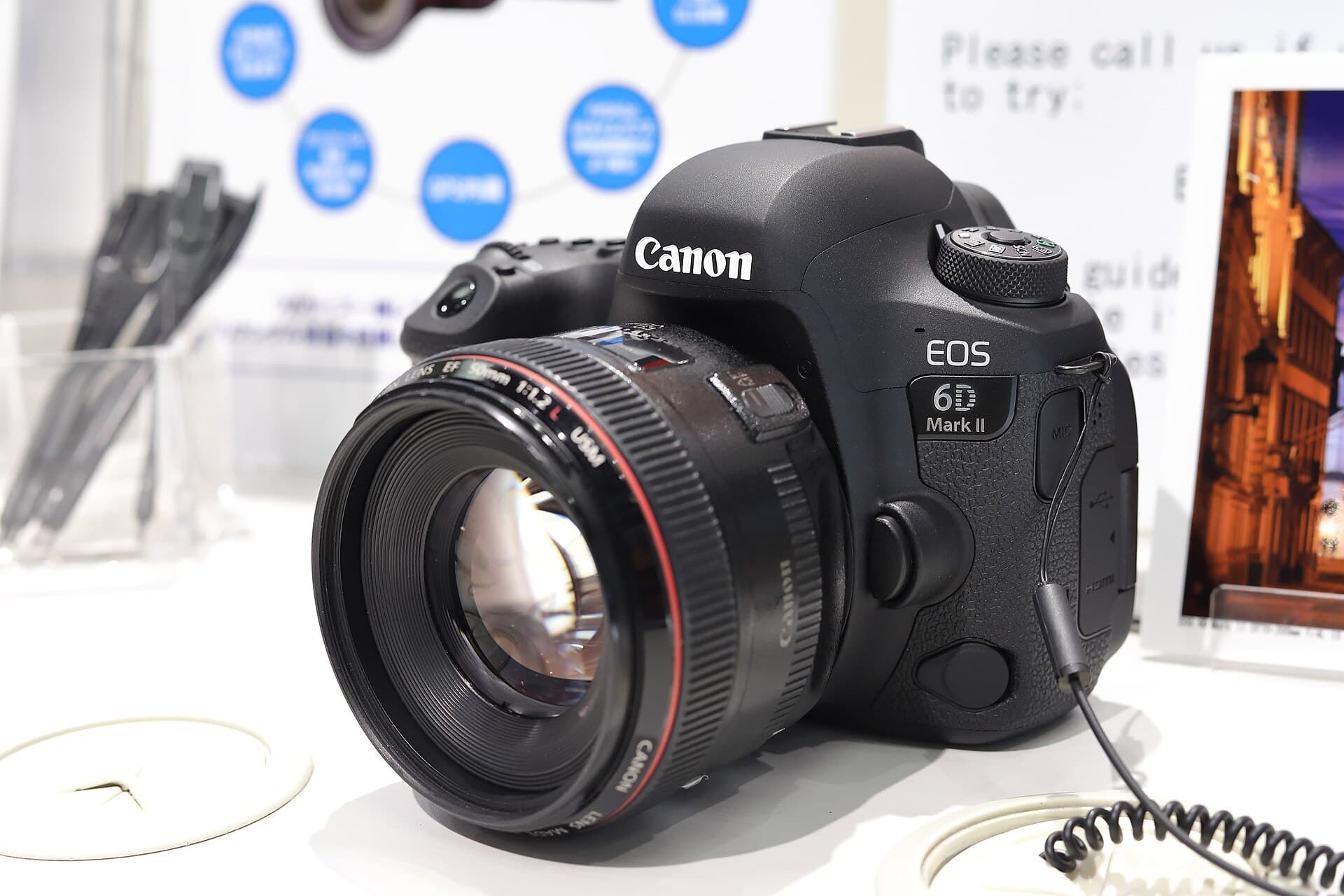 Comparison
Canon 6D vs 6D Mark II: Is the Upgrade Actually Worth It
What actually changed between Canon's original entry-level full-frame DSLR and its 2017 successor — autofocus, screen, ISO — and the video limit that didn't move.
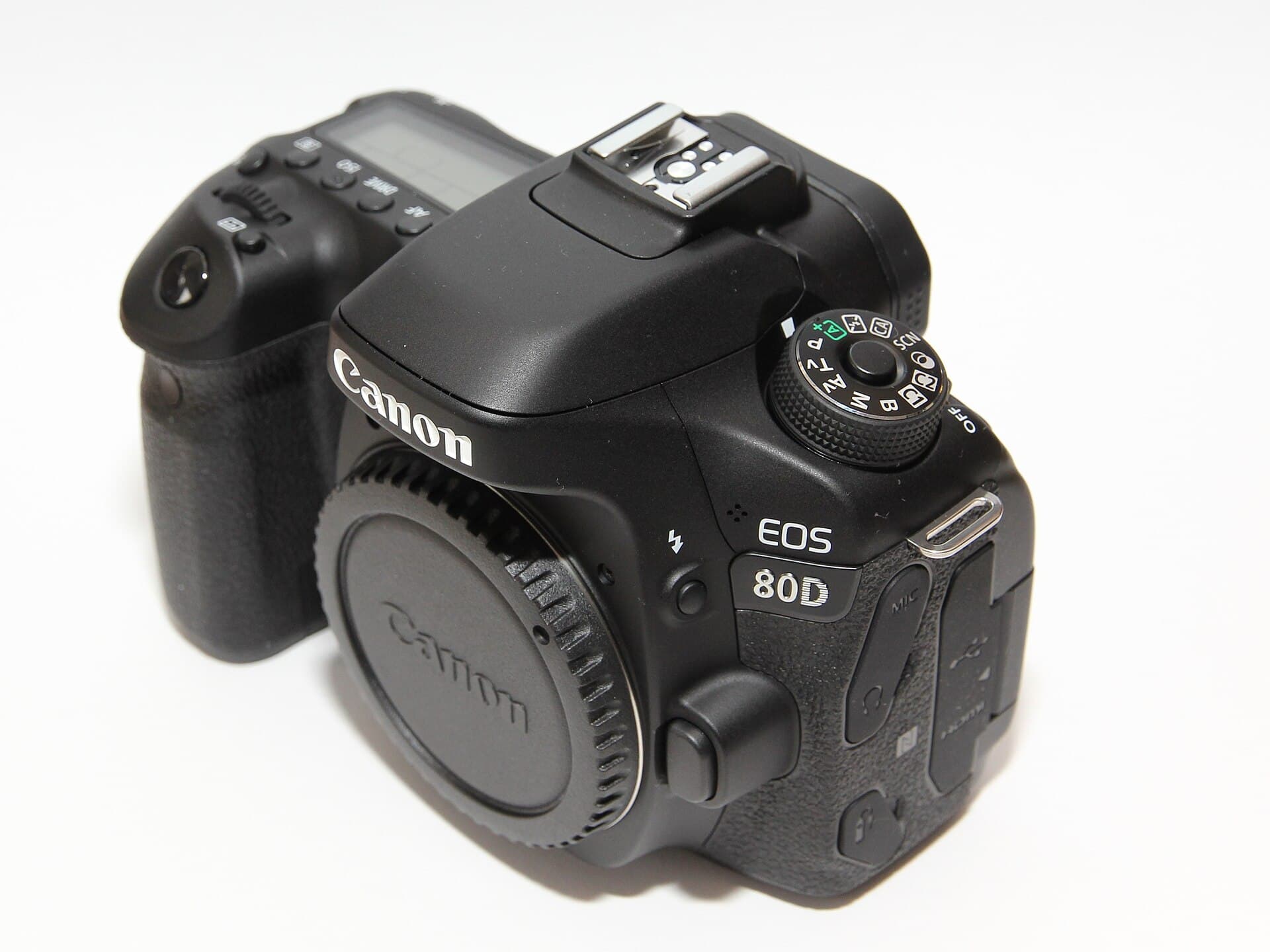 Comparison
Canon EOS 70D vs 80D vs 90D: What Actually Changed Between Generations
A generation-by-generation breakdown of what actually improved between the Canon EOS 70D, 80D, and 90D, and how to pick the right one for your budget.
 Guide
GuideDSLR vs Mirrorless: The Real Trade-offs, Not the Marketing Version
Beyond the marketing claim that mirrorless is simply better — where DSLRs still win on battery life and price, and where mirrorless autofocus genuinely pulls ahead.
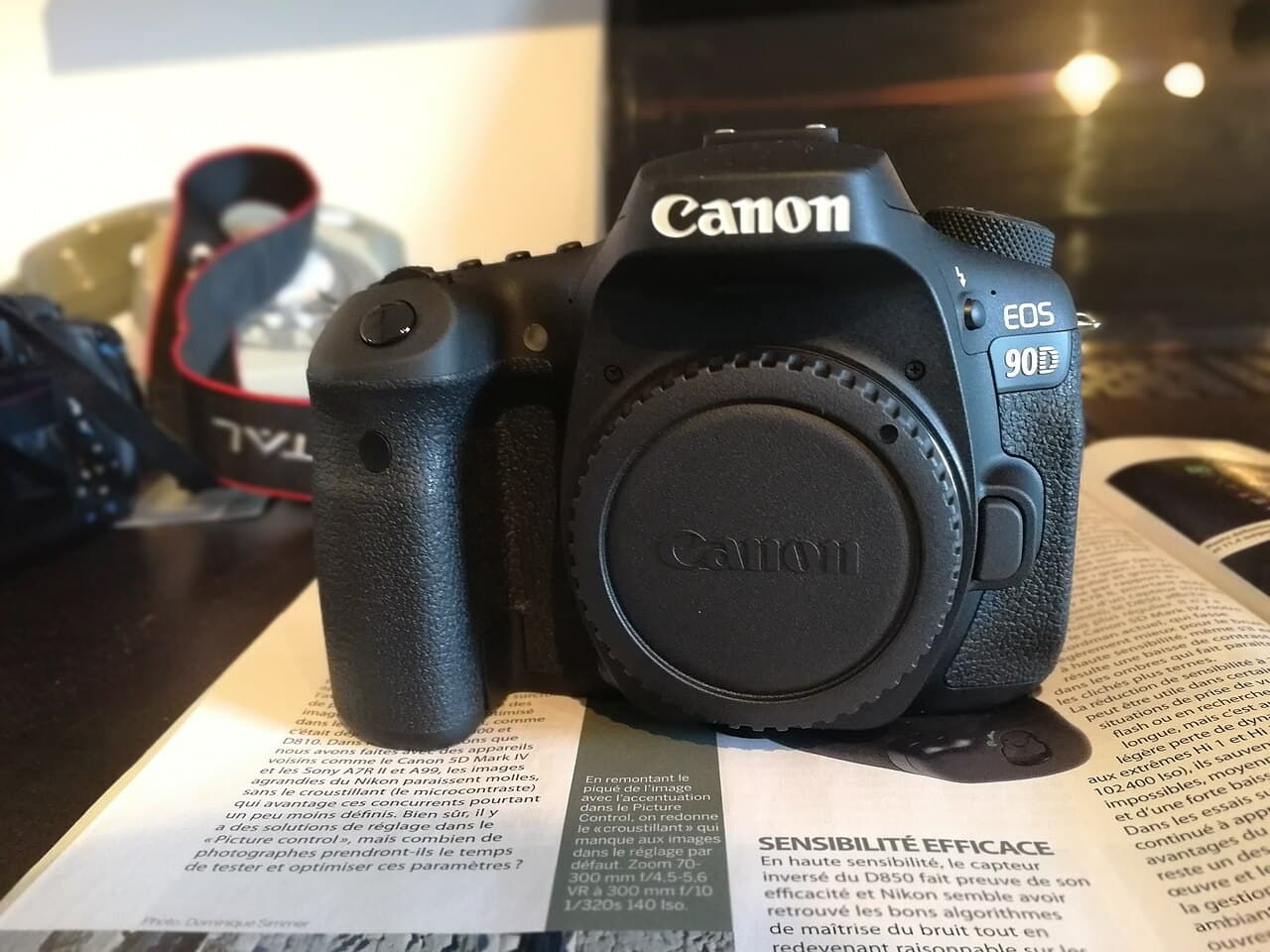 Comparison
Canon 90D vs Entry Mirrorless: Which Should You Actually Buy
Canon's last major APS-C DSLR against a current entry-level APS-C mirrorless body — autofocus generation, battery life, weather sealing, and lens ecosystem compared.
 Guide
GuideBest Used Canon DSLRs for Beginners
Why a used Canon DSLR is still a smart first camera, what actually matters for learning photography, and how to buy used gear safely.
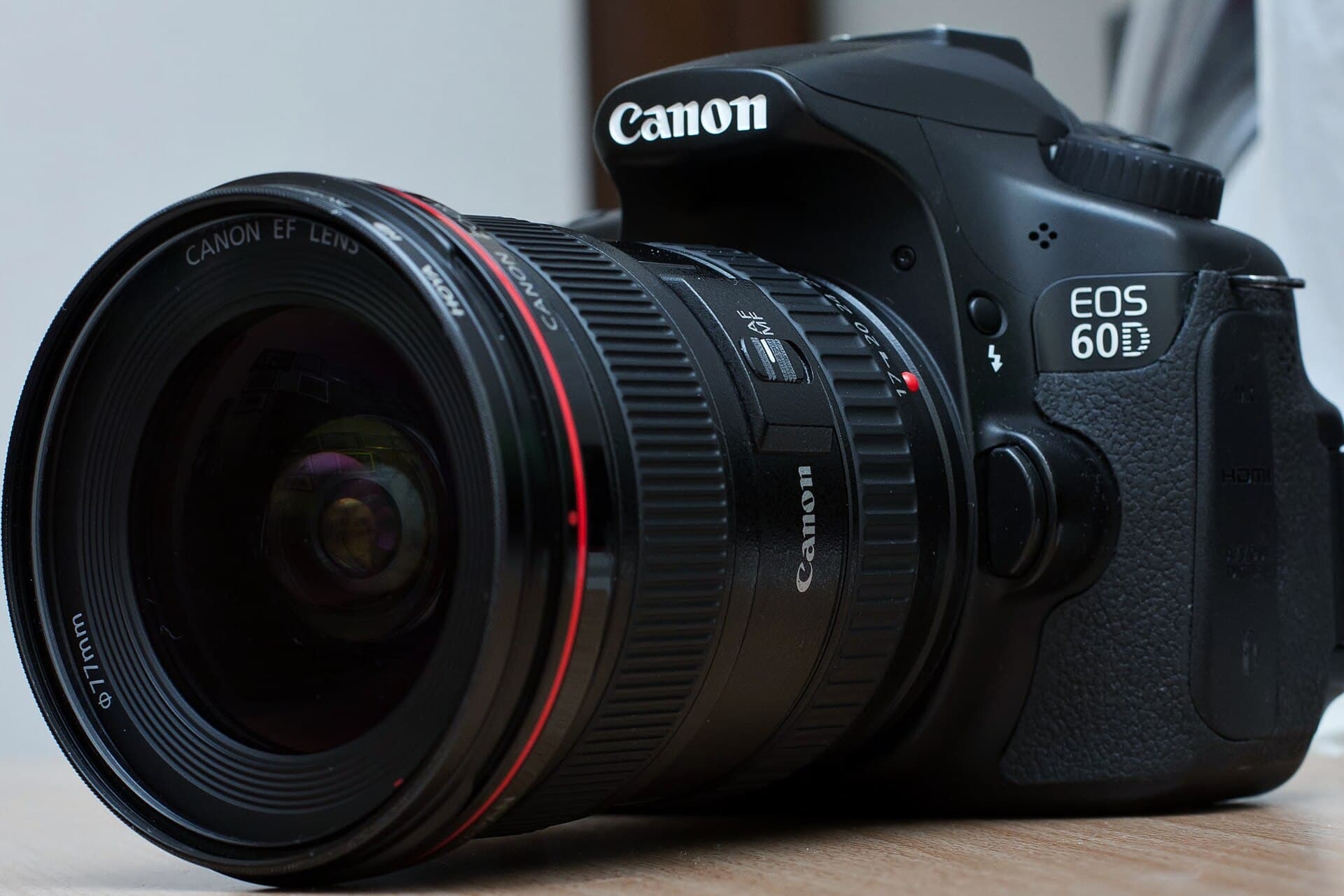 Troubleshooting
Canon EOS 60D: Is It Still Worth Buying?
What the EOS 60D's age actually costs you in autofocus and video, and who it still makes sense for as a cheap, capable stills camera today.