Canon 90D vs Entry Mirrorless: Which Should You Actually Buy
Canon's last major APS-C DSLR against a current entry-level APS-C mirrorless body — autofocus generation, battery life, weather sealing, and lens ecosystem compared.
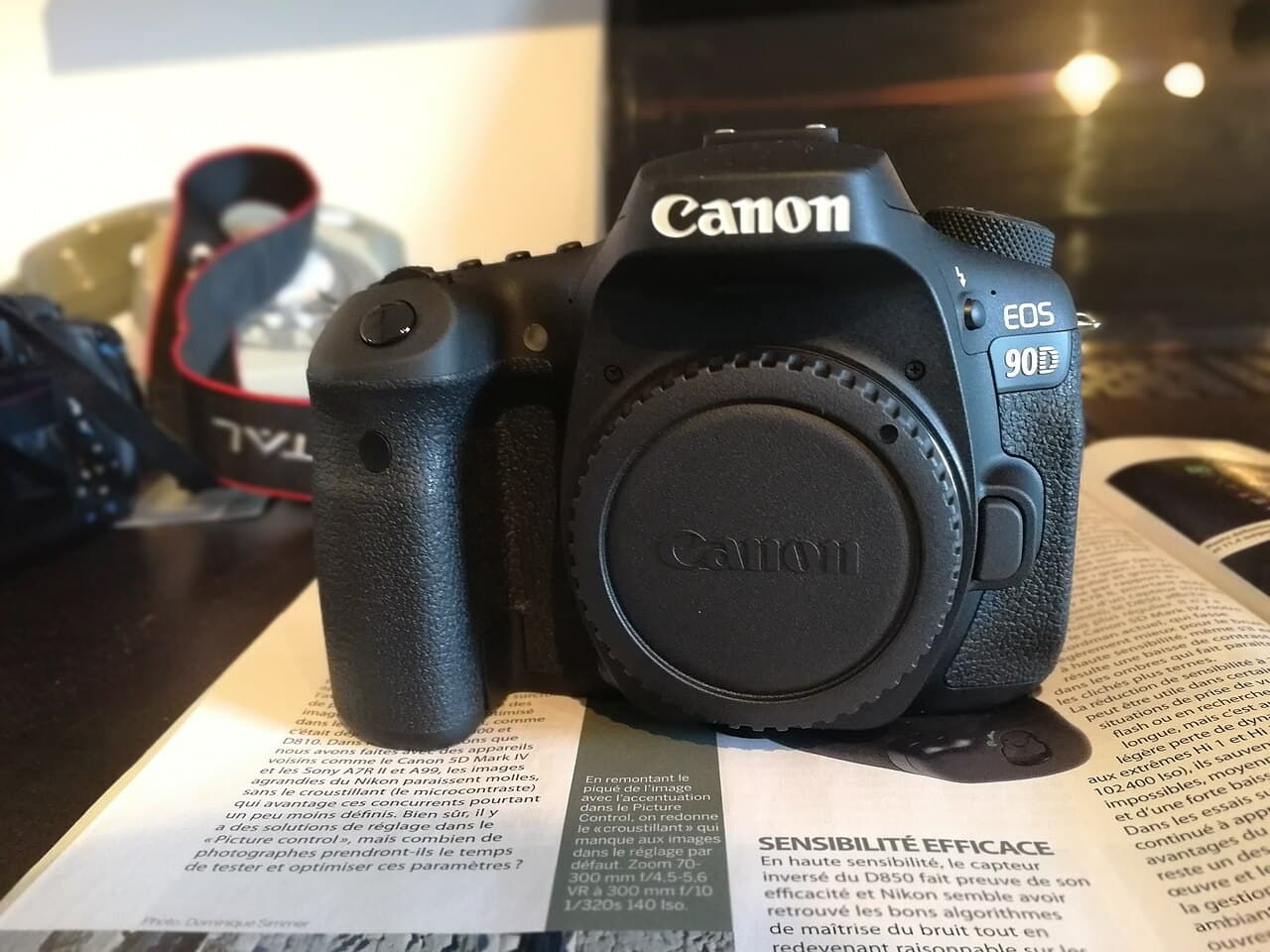
The 90D (2019) is the last major statement in Canon's APS-C DSLR line before its development attention moved fully to mirrorless. The R10 (2022) is a current-generation entry-level APS-C mirrorless body, positioned as the lighter, cheaper sibling to the R7. Both are realistically buyable today, which makes this a genuine live decision rather than an abstract "old vs new" exercise — see our general DSLR vs mirrorless trade-offs guide for the structural version of this same choice.
Resolution and autofocus: a counterintuitive gap
The 90D actually has more resolution — 32.5MP against the R10's 24.2MP — which runs against the usual assumption that newer means higher-resolution. Where the R10 pulls ahead is autofocus generation: the 90D pairs 45 cross-type AF points in the viewfinder with 5,481 phase-detect points in live view via Dual Pixel CMOS AF, while the R10 runs Dual Pixel CMOS AF II across 651 zones — a full autofocus generation newer, even on the lower-resolution body.
Burst rate
90D: 10fps mechanical, 7fps electronic. R10: 15fps mechanical, 23fps electronic. The R10 is meaningfully faster, especially on the electronic-shutter ceiling.
Battery life — a dramatic number that needs context
The 90D is CIPA-rated for 1,300 shots per charge; the R10 for 350. That gap looks alarming in isolation, but it's not really about battery capacity — it's the same structural difference covered in our DSLR vs mirrorless guide: an optical viewfinder draws essentially no power, while a mirrorless EVF and continuously-active sensor draw power the entire time the camera is on. Budget for spare batteries with the R10 in a way you likely wouldn't with the 90D.
Weather sealing and body weight
The 90D's specs confirm weather sealing; the R10's confirmed specs don't list it. The 90D also weighs more (701g vs 426g) — a substantial grip and body against a noticeably lighter one, which cuts differently depending on whether you want heft or portability.
Video
Both do 4K UHD at 30p without a crop. The 90D adds uncropped 1080p up to 120p; the R10 adds a higher-frame-rate 4K option (up to 59.94fps) but only with a sensor crop at that rate. Broadly comparable at the headline 4K30 level, with each body offering something the other doesn't past that.
Lens ecosystem — the part the spec sheet won't tell you
The 90D uses Canon's EF-S mount, backed by two decades of EF/EF-S lenses, a large share of them inexpensive on the used market. The R10 uses the newer RF mount, whose native lineup is still growing and generally costs more new — though EF/EF-S lenses adapt onto RF bodies via Canon's own adapter, so an R10 buyer isn't locked out of that older, cheaper glass, just adding an adapter into the chain.
Who should actually buy which
The 90D: buyers who want long battery life, confirmed weather sealing, and access to the cheapest available used lens market, and who are comfortable with an optical viewfinder. The R10: buyers who want a current-generation autofocus system and Canon's ongoing RF lens development, don't mind carrying spare batteries, and want the lighter body.
The honest bottom line
Neither camera is simply "better" — the 90D wins on battery life, weather sealing, and lens-market price; the R10 wins on autofocus generation and burst rate. Which one is right depends on whether autofocus performance or all-day battery/weather resilience matters more for what you actually shoot.
Products covered
| Specification | Canon EOS 90D | Canon EOS R7 | Canon EOS R10 |
|---|---|---|---|
| Sensor type | CMOS sensor (supports Dual Pixel CMOS AF), approx. 22.3 x 14.8 mm | CMOS sensor, approx. 22.3 x 14.8 mm (APS-C) | CMOS sensor, approx. 22.3 x 14.9 mm (APS-C) |
| Effective megapixels | 32.5 MP | 32.5 MP | 24.2 MP |
| Processor | DIGIC 8 | DIGIC X | DIGIC X |
| Lens mount | EF-S | RF | RF |
| Autofocus system | 45-point all cross-type phase-detection AF with dedicated AF sensor (viewfinder); Dual Pixel CMOS AF in live view | Dual Pixel CMOS AF (Canon states "Dual Pixel CMOS AF: Supported") | Dual Pixel CMOS AF (Canon states "Dual Pixel CMOS AF: Supported") |
| ISO range (native) | 100-25600 | 100-32000 | 100-32000 |
| ISO range (expanded) | H: 51200 | 51200 | 51200 |
| Burst rate (mechanical shutter) | 10 fps | 15 fps | 15 fps |
| Burst rate (electronic shutter) | 7 fps | 30 fps | 23 fps |
| Shutter speed range | 30 sec. - 1/8000 sec. (mechanical); 1/16000 sec. (electronic) | 30 s - 1/8000 s (mechanical); 1/16000 s (electronic) | 30s to 1/4000s (mechanical); 30s to 1/16000s (electronic) |
| Video resolutions/frame rates | 4K UHD 30p and 1080p FHD up to 120p, no crop | 4K up to 59.94fps; 1080p up to 119.9fps | 4K UHD up to 29.97fps (59.94fps with crop); 1080p up to 119.88fps |
| Image stabilisation | None (lens-based IS only) | 5-axis in-body, up to 7 stops | None (lens-based IS only) |
| Electronic viewfinder | Optical pentaprism, 100% coverage, 0.95x magnification | 2.36m-dot OLED EVF, 1.15x magnification | 2.36m-dot OLED EVF, 0.95x magnification |
| Rear display | 3.0in Clear View II colour TFT vari-angle touchscreen | 3.2in fully articulating, 1.62m dots | 3.0in fully articulating touchscreen |
| Storage/card slots | SD/SDHC/SDXC (UHS-II) | 2x SDXC (UHS-II) | 1x SDXC (UHS-II) |
| Battery model | LP-E6N (1800 mAh) | LP-E6NH | LP-E17 |
| Battery life (CIPA shots) | 1300 shots | Not recorded | 350 shots |
| Dimensions (W×H×D) | 140.8 x 104.8 x 76.8 mm | 132 x 90 x 92 mm | 122.5 x 87.8 x 83.4 mm |
| Weight (body only) | 701 g | 530 g | 426 g |
| Connectivity | Bluetooth, Wi-Fi | USB-C (10Gbps), Wi-Fi 4, Bluetooth 4.2 | USB-C (USB 2.0), Wi-Fi 4, Bluetooth 4.2 |
| Announcement date | 28 August 2019 | 24 May 2022 | 24 May 2022 |
| Launch MSRP (USD, body only) | $1,199 (body only) | $1,499 (body only) | $979.99 (body only) |
| Maximum video resolution | 4K (3840 x 2160) | 4K UHD (3840 x 2160) | 4K UHD (3840 x 2160) |
| Viewfinder | Eye-level pentaprism optical viewfinder | OLED colour electronic viewfinder, approx. 0.39 inch | OLED colour electronic viewfinder, approx. 0.39 inch |
Related comparisons
Other head-to-heads covering the same subject.
 Comparison
Canon EOS R5 vs R6: Which Full-Frame R Body Do You Need
Resolution, video ceiling, and the ISO advantage that actually favors the cheaper R6 — a spec-by-spec look at Canon's two July 2020 full-frame flagships.
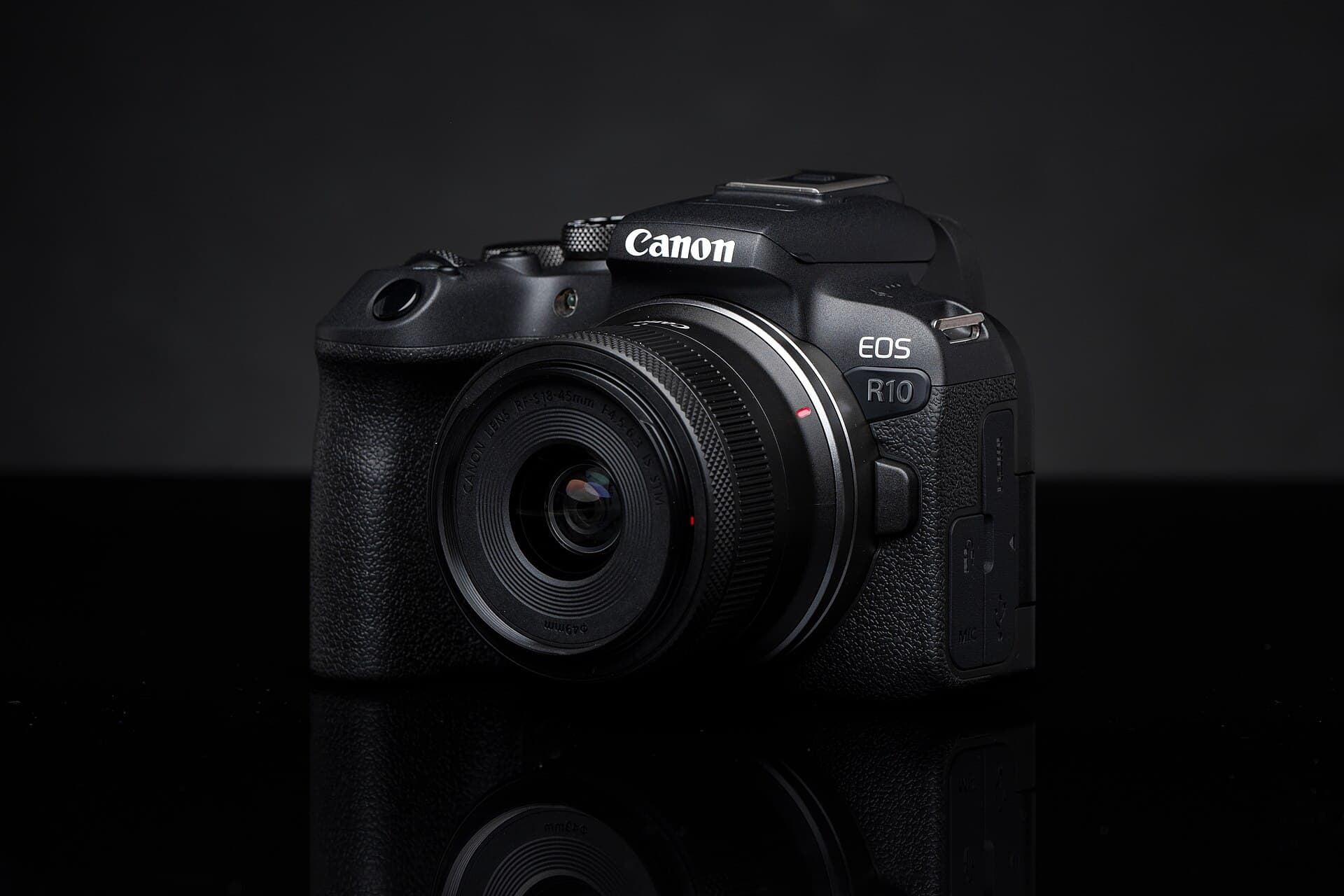 Comparison
Canon R10 vs R7: Canon's APS-C Mirrorless Lineup Explained
Why the R10 and R7 aren't a generational succession, and the one spec — in-body stabilization — that matters more than everything else on this comparison.
 Comparison
Canon 6D vs 6D Mark II: Is the Upgrade Actually Worth It
What actually changed between Canon's original entry-level full-frame DSLR and its 2017 successor — autofocus, screen, ISO — and the video limit that didn't move.
 Comparison
Canon EOS 70D vs 80D vs 90D: What Actually Changed Between Generations
A generation-by-generation breakdown of what actually improved between the Canon EOS 70D, 80D, and 90D, and how to pick the right one for your budget.