Canon EOS 60D: Is It Still Worth Buying?
What the EOS 60D's age actually costs you in autofocus and video, and who it still makes sense for as a cheap, capable stills camera today.
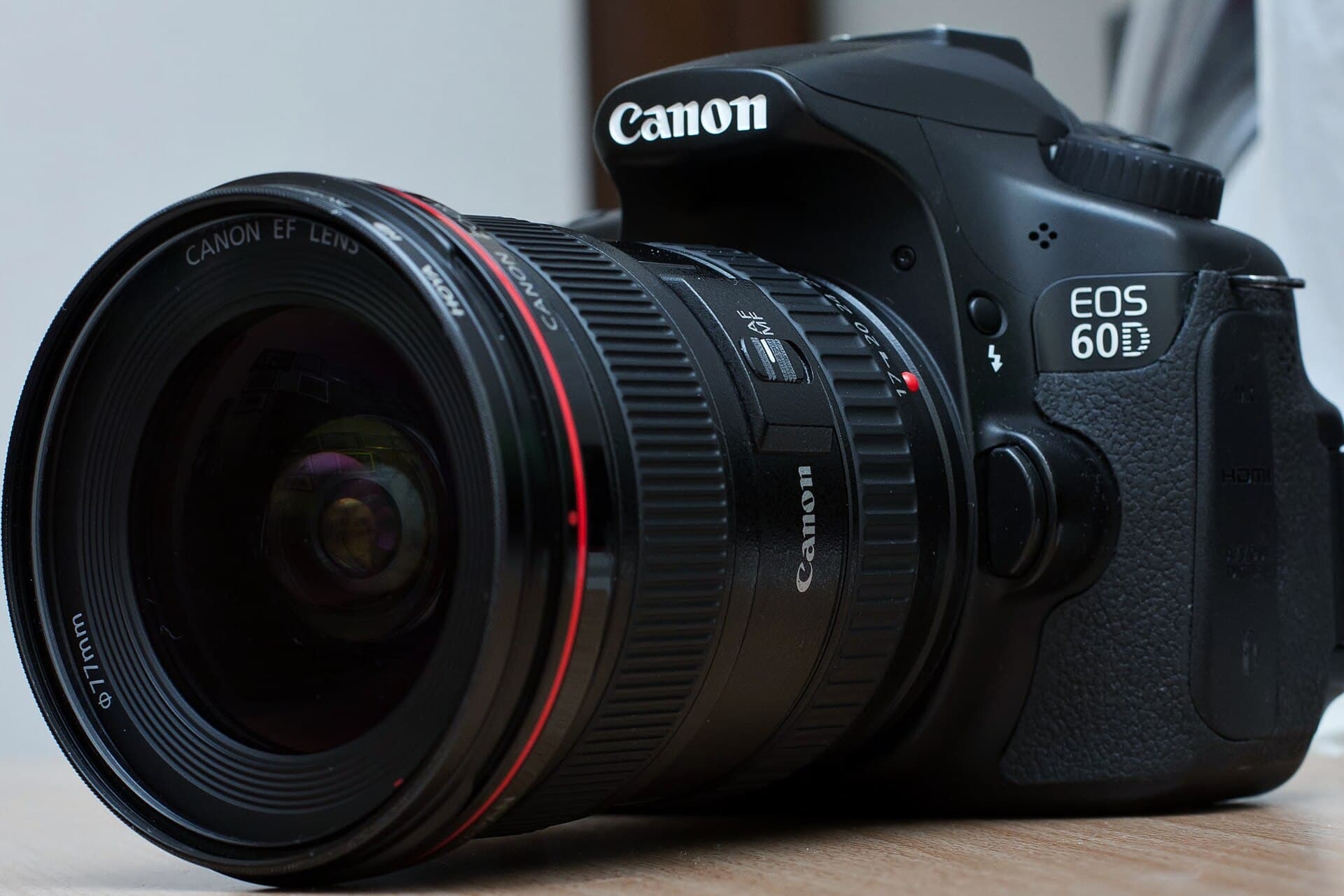
The 60D is now an old camera by any reasonable definition — it belongs to an early generation of Canon's enthusiast APS-C DSLR line, well before the 70D, 80D, and 90D that followed it. That age is exactly why it still comes up as a buying question: it's cheap, it's plentiful on the used market, and the specific things that make a camera feel dated don't affect every kind of photography equally.
What "old" actually costs you here
The autofocus system predates the on-sensor phase-detect technology Canon introduced with the 70D, which means live-view and video autofocus on the 60D is noticeably slower and hunts more than on any Canon body from the 70D onward. Video capability is limited by the standards of a modern camera — no 4K, and the video autofocus limitation above applies directly. ISO performance and dynamic range, while perfectly usable, are behind what Canon's later sensors delivered. None of this is a surprise for a camera of its era; it's the expected gap.
What doesn't really change
Through-the-viewfinder autofocus — the mode you'd use holding the camera up to your eye for a static or slow-moving subject — is far less affected by the camera's age than live-view autofocus is. Basic image quality for a well-lit, non-action photo (a portrait, a landscape, a product shot) holds up better than the spec sheet gap suggests, because good light does most of the work regardless of sensor generation. And it takes the same EF lens mount as every Canon DSLR before it, so lens choice isn't a downgrade.
Who it actually makes sense for
Someone learning photography on a tight budget, who wants to understand exposure, composition, and manual control without a large investment. Someone who shoots deliberately — tripod work, still subjects, learning off-camera flash — where autofocus speed isn't the bottleneck. Someone who already owns EF lenses and wants a cheap second body.
Who should look elsewhere
Anyone shooting fast-moving subjects, anyone who wants competent video, and anyone who will mostly compose and shoot using the rear screen rather than the viewfinder — live view autofocus is the 60D's clearest weak point, and it's a daily-use one for a lot of casual shooters.
The honest framing: the 60D is a genuinely capable stills camera held back by one specific, well-defined limitation. If that limitation doesn't touch how you actually shoot, its age matters much less than the price difference suggests it should.
Products covered
| Specification | Canon EOS 60D | Canon EOS 70D | Canon EOS 80D |
|---|---|---|---|
| Sensor format | APS-C (22.3 x 14.9 mm) | APS-C (22.5 x 15.0 mm) | APS-C (22.3 x 14.9 mm) |
| Effective megapixels | 18.1 MP | 20.2 MP | 24.2 MP |
| Processor | DIGIC 4 | DIGIC 5+ | DIGIC 6 |
| Autofocus system | 9 cross-type AF points | 19 cross-type AF points, Dual Pixel CMOS AF | 45 cross-type AF points |
| ISO range (native) | 100-6400 | 100-12800 | 100-16000 |
| ISO range (expanded) | H: 12800 | 25600 | H: 25600 |
| Burst rate (mechanical shutter) | 5.3 fps | 7 fps | 7 fps |
| Shutter speed range | 1/8000 sec. - 30 sec. and Bulb; X-sync at 1/250 sec. | 1/8000 sec. to 30 sec.; X-sync at 1/250 sec. | 1/8000 sec. - 30 sec., Bulb; X-sync at 1/250 sec. |
| Video resolutions/frame rates | 1080p at 24/25/30p; 720p at 50/60p; 480p at 50/60p | Full HD (1080p) | 1080p at 60/50 fps |
| Electronic viewfinder | Eye-level pentaprism, 96% coverage, 0.95x magnification | Eye-level pentaprism, 98% coverage, 0.95x magnification | Optical pentaprism, 100% coverage, 0.95x magnification |
| Rear display | Fully articulating 3.0in Clear View II colour LCD, 1,040,000 dots | 3.0in Clear View II colour TFT vari-angle touchscreen, 1,040,000 dots | 3.0in Clear View II colour TFT vari-angle touchscreen |
| Storage/card slots | SD/SDHC/SDXC | SD/SDHC/SDXC (UHS-I) | SD/SDHC/SDXC (UHS-I) |
| Battery model | LP-E6 (1800 mAh) | LP-E6 (1800 mAh) | LP-E6N |
| Dimensions (W×H×D) | 144.5 x 105.8 x 78.6 mm | 139.0 x 104.3 x 78.5 mm | 139 x 105.2 x 78.5 mm |
| Weight (body only) | 755 g | 755 g | 650 g |
| Connectivity | 3.5mm stereo mic jack; external shutter release port | Built-in Wi-Fi; 3.5mm stereo microphone jack | Built-in NFC, Wi-Fi |
| Announcement date | 26 August 2010 | 2 July 2013 | 18 February 2016 |
| Launch MSRP (USD, body only) | $1,099 (body only) | $1,199 (body only) | Not recorded |
| Sensor type | CMOS | CMOS | CMOS |
| Lens mount | Canon EF-S | Canon EF-S | Canon EF-S |