Canon EOS R5 vs R6: Which Full-Frame R Body Do You Need
Resolution, video ceiling, and the ISO advantage that actually favors the cheaper R6 — a spec-by-spec look at Canon's two July 2020 full-frame flagships.
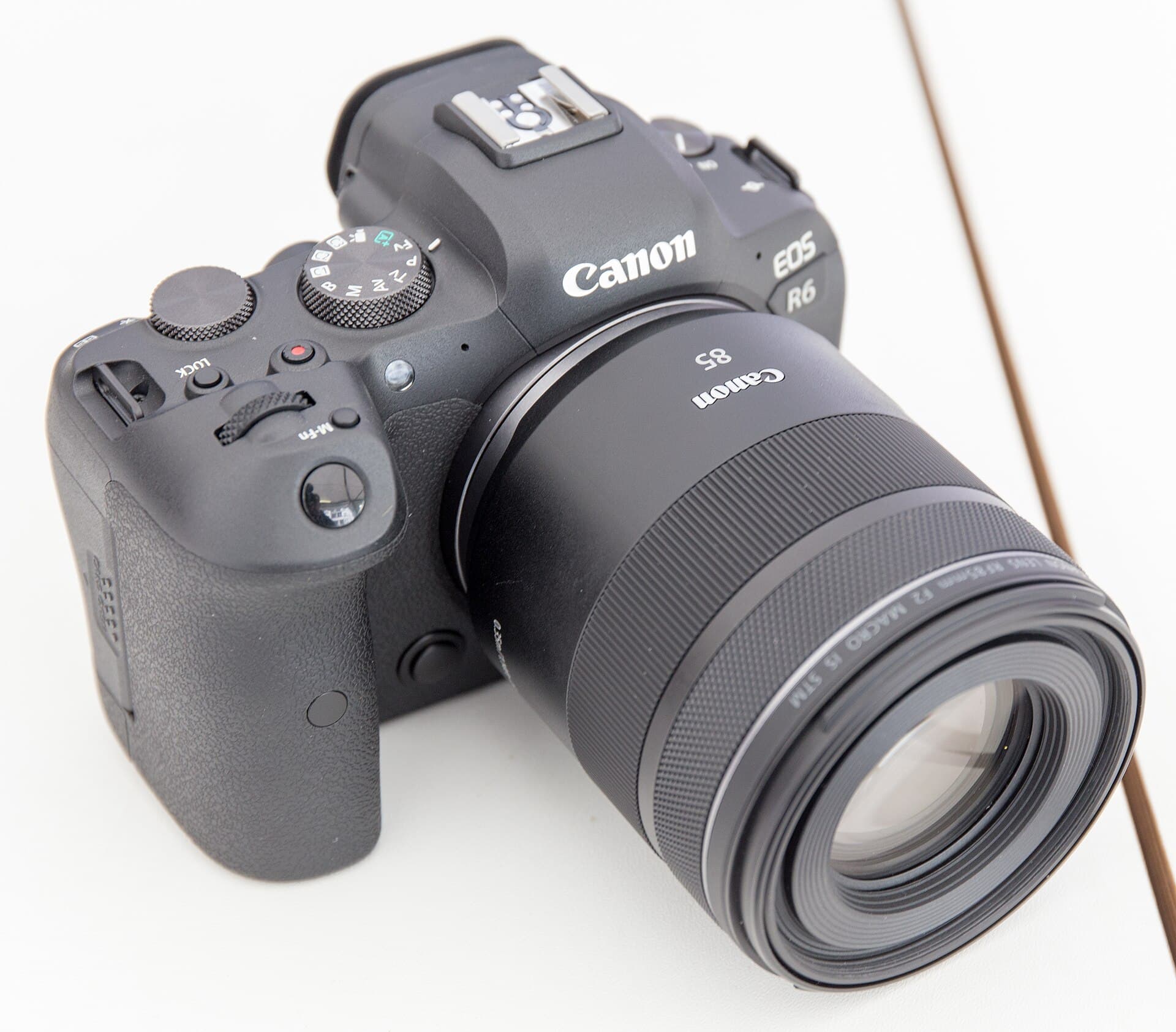
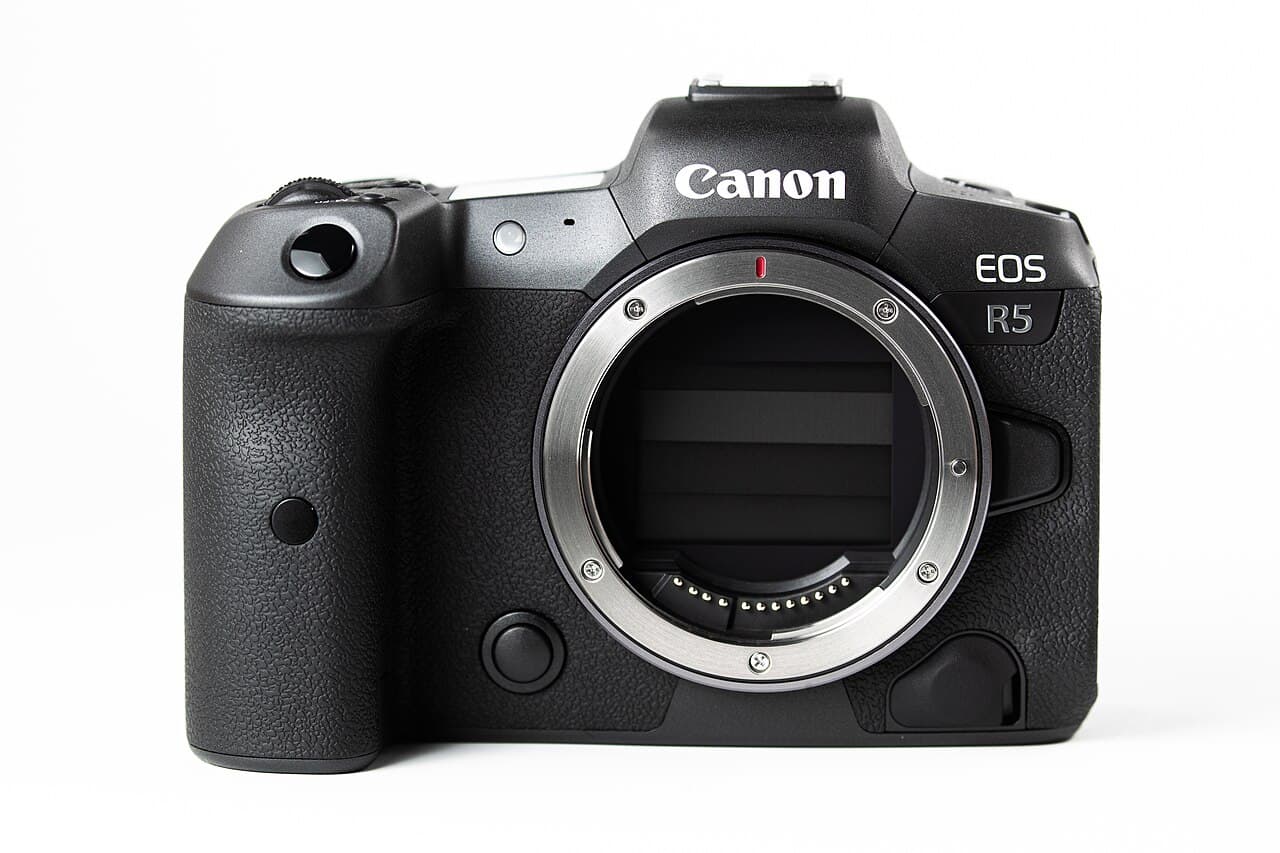
The R5 and R6 launched the same day in July 2020, at $3,899 and $2,499 respectively — a genuine $1,400 gap. That's not a simple better/worse hierarchy; Canon split these two bodies deliberately into a resolution-and-video flagship and a speed-and-low-light body, and most of what separates them traces back to that split.
Resolution: the headline difference everything else follows from
The R5's 44.8MP sensor is more than double the R6's 20.1MP. This isn't just a print-size number — it directly drives the video capability, storage demands, and buffer behavior discussed below.
Video ceiling, including a real caveat on the R5
The R5 records 8K RAW at 29.97fps and 4K up to 119.9fps — but its own spec data includes a documented limit of approximately 20 minutes of 8K recording before thermal shutdown on the base R5, a real-world constraint worth knowing rather than a hypothetical one. The R6 tops out at 4K up to 59.94fps with no 8K mode at all, a ceiling that also means it isn't pushing the same data throughput that produces the R5's thermal limit in the first place.
Autofocus: both dense, worth reading carefully
The R5's specs list 5,940 selectable AF points; the R6's list 1,053 — both cover 100% of the frame according to their own spec sheets. The point-count gap is often cited as proof the R5 autofocuses better, but a higher point count alone doesn't necessarily translate to meaningfully better real-world tracking — both share the same DIGIC X-generation Dual Pixel CMOS AF II system, and treating the R5 as simply "smarter" at autofocus because its spec sheet lists more points overstates what that specific number confirms.
ISO and low light: where the cheaper body actually wins
Counterintuitively, the R6 has the higher expanded ISO ceiling — up to 204800, against the R5's 102400. This is a direct consequence of the R6's larger individual pixels at lower resolution gathering more light each. If low-light stills performance matters more to you than resolution, this is a genuine point in the R6's favor, not just a consolation spec for the cheaper body.
Viewfinder and storage
The R5's EVF is a 5.76-million-dot unit with 120fps refresh — meaningfully sharper and smoother than the R6's 3.69-million-dot EVF. Storage follows the same split: the R5 uses a CFexpress slot alongside SDXC (CFexpress being necessary to sustain its highest-bitrate 8K modes), while the R6 uses dual SDXC UHS-II slots — cheaper, more flexible media that can't sustain the R5's top modes.
Where they don't differ
Both share 5-axis in-body stabilization rated to 8 stops, and the same 12fps mechanical / 20fps electronic burst ceiling — despite the price and resolution gap, Canon didn't hold either of those back on the R6.
Who should pick which
The R5: video-first shooters who need 8K or high-frame-rate 4K, high-resolution stills for large prints or heavy cropping, and anyone prepared to shoot on CFexpress media. The R6: stills-focused shooters who value low-light performance and faster, cheaper file workflows over resolution, anyone not planning to shoot 8K, and — the honest budget case — anyone for whom the $1,400 difference is better spent on lenses.
The honest bottom line
This isn't "R5 better, R6 cheaper" — the R6 genuinely outperforms the R5 in expanded ISO ceiling, and matches it on stabilization and burst rate. The real decision is resolution and video ceiling versus low-light stills performance and cost, not a straightforward hierarchy.
Products covered
| Specification | Canon EOS R5 | Canon EOS R6 |
|---|---|---|
| Sensor type | CMOS sensor, approx. 36.0 x 24.0 mm | CMOS sensor, approx. 35.9 x 23.9 mm |
| Effective megapixels | 45 MP | 20.1 MP |
| ISO range (native) | 100-51200 | 100-102400 |
| ISO range (expanded) | 50-102400 | 50-204800 |
| Video resolutions/frame rates | 8K RAW at 29.97fps; 4K at up to 119.9fps | 4K at 59.94fps; 1080p up to 120fps |
| Electronic viewfinder | 5.76m-dot OLED EVF, 0.76x magnification, 120fps refresh | 3.69m-dot OLED EVF, 0.76x magnification, 100% coverage |
| Rear display | 3.2in vari-angle touchscreen, 2.1m dots | 3.2in, 1.62m dots |
| Storage/card slots | 1x CFexpress + 1x SDXC (UHS-II) | 2x SDXC (UHS-II) |
| Dimensions (W×H×D) | 138 x 97.5 x 88 mm | 138.4 x 97.5 x 88.4 mm |
| Weight (body only) | 650 g | 598 g |
| Connectivity | 2.4GHz/5GHz Wi-Fi, Bluetooth | USB-C (USB 3.1 Gen 2), Wi-Fi, Bluetooth 4.2 |
| Launch MSRP (USD, body only) | $3,899 (body only) | $2,499 (body only) |
| ISO (max) | 51200 | 102400 |
| Maximum video resolution | 8K UHD (Canon's movie table lists 8K DCI and 8K UHD) | 4K UHD (3840 x 2160) |
| Maximum video frame rate | 29.97 fps | 59.94 fps |
| Viewfinder resolution | 5760000 | 3690000 |
| Screen size | 3.2 in | 3 in |
| Weight | 738 g | 680 g |
| Width | 138.5 mm | 138.4 mm |
| Depth | 88 mm | 88.4 mm |
| Sensor format | full-frame | full-frame |
| Processor | DIGIC X | DIGIC X |
| Lens mount | RF | RF |
| Autofocus system | Dual Pixel CMOS AF (Canon states "Dual Pixel CMOS AF: Supported") | Dual Pixel CMOS AF (Canon states "Dual Pixel CMOS AF: Supported") |
Related comparisons
Other head-to-heads covering the same subject.
 Comparison
Canon R10 vs R7: Canon's APS-C Mirrorless Lineup Explained
Why the R10 and R7 aren't a generational succession, and the one spec — in-body stabilization — that matters more than everything else on this comparison.
 Comparison
Canon 90D vs Entry Mirrorless: Which Should You Actually Buy
Canon's last major APS-C DSLR against a current entry-level APS-C mirrorless body — autofocus generation, battery life, weather sealing, and lens ecosystem compared.
 Comparison
Canon EOS R vs RP: Canon's First Full-Frame Mirrorless Bodies Compared
Canon's original full-frame RF mirrorless body against the smaller, cheaper RP that followed five months later — viewfinder, burst rate, battery, and video crop compared.
 Comparison
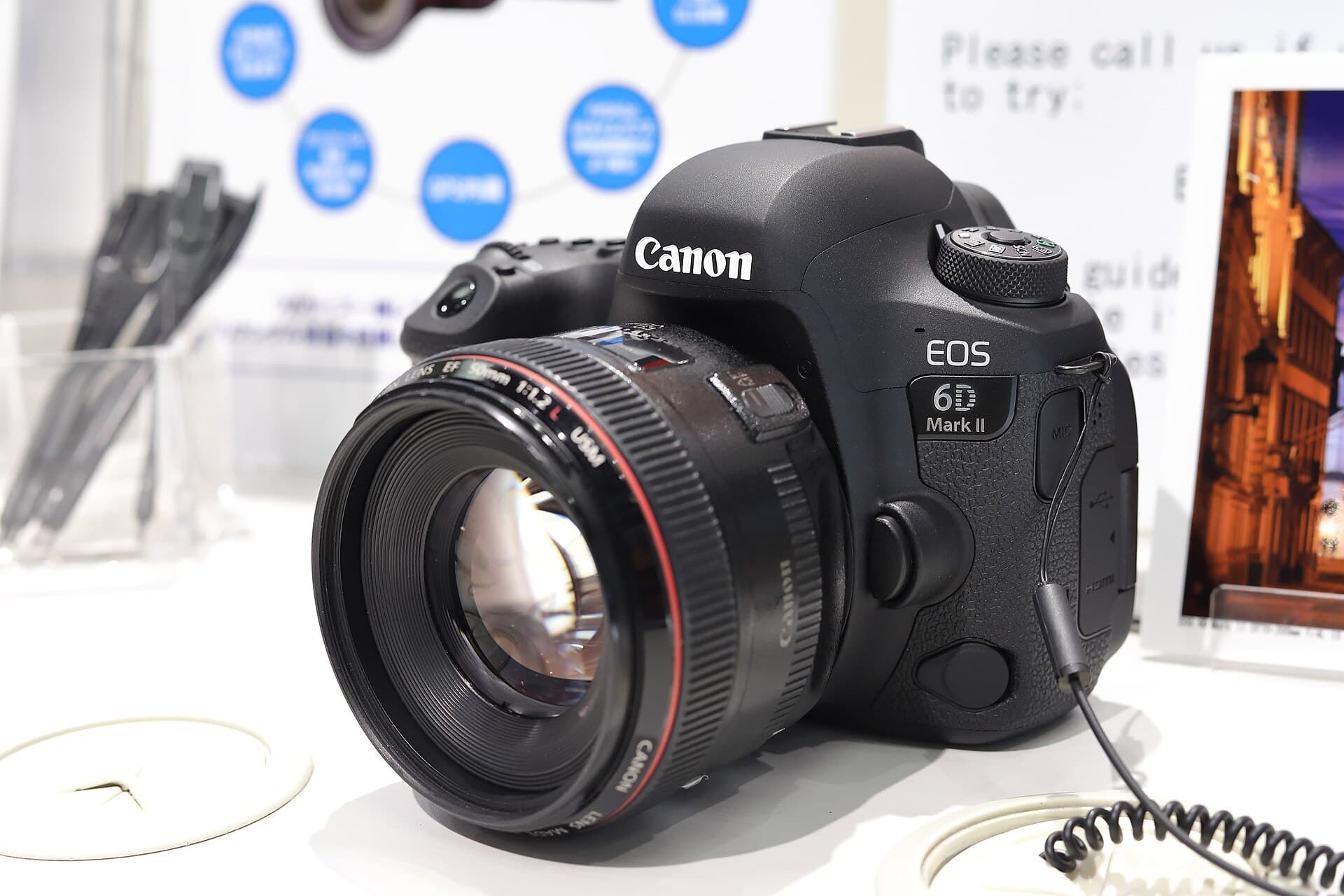
Canon 6D vs 6D Mark II: Is the Upgrade Actually Worth It
What actually changed between Canon's original entry-level full-frame DSLR and its 2017 successor — autofocus, screen, ISO — and the video limit that didn't move.